
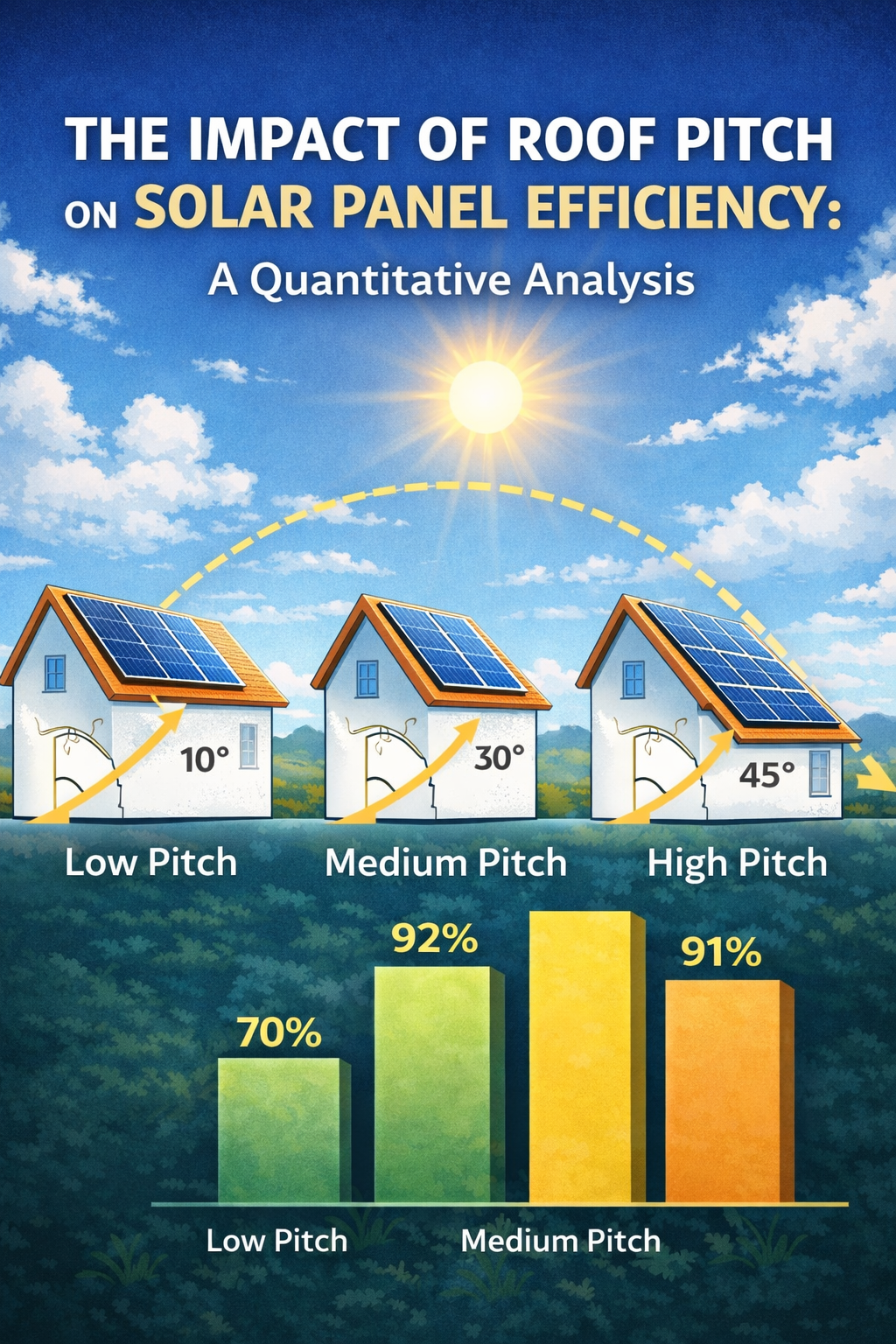
🌞 はじめに: 太陽エネルギー捕捉の幾何学
ソーラーパネルの向きとエネルギー生成の基本的な関係は、形状と太陽放射の基本原理によって決まります。. 太陽光がパネルに垂直に当たる場合, エネルギー密度が最大化される, パネルは理論上のピーク効率で動作します [1]. 入射角が垂直からずれると、, 同じ太陽の光束がより広い表面積に分布します。, 単位面積あたりの放射線の強度が減少し、その結果、出力が減少します。 [2].
固定設置型太陽光発電システム用, 目的は、年間エネルギー捕捉を最大化する最適な傾斜角を特定することです。. この最適な角度は主に地理的な緯度によって決まります。, 一般的な規則は、傾斜角を緯度と同じに設定すると、年間の生産が最適化されることを示唆しています。 [3]. 季節調整は追加することで行うことができます 10-15 太陽の通り道が低い冬の生産に有利な度, または引き算 10-15 夏世代を強化する度数 [4].
しかしながら, 住宅用および商業用の屋上設置は固有の制約に直面しています: 既存の屋根の勾配によって利用可能な傾斜角が決まります. この制限により、この分析で取り上げられた重要な疑問が生じます。: 屋根の角度が最適な傾斜から外れると、どれだけの電力が失われるか?
📐 数学的枠組み: 傾斜面での日射量
屋根の角度と出力の関係を定量化するには, まず、傾斜面に入射する太陽放射の支配方程式を確立する必要があります。. 包括的なモデルでは、空の拡散放射と地面からの反射成分が考慮されます。, 通常、支配的な要因は直接ビーム放射です。 [5].
傾斜したモジュール上の放射と水平面上の放射を関連付ける簡略化された式は、次の式で与えられます。:
どこ:
- = 傾斜したモジュール上の日射量 (W/㎡)
- = 水平面上の太陽放射 (W/㎡)
- ある = 太陽仰角 (地平線上の度)
- b = 水平からのモジュールの傾斜角 (度) [6]
この関係は、太陽光線に対して垂直に入射する放射線を考慮することで導き出すことができます。 ():
パネルを傾ける目的は、 学期, これにより、モジュールの表面が太陽光線に対して垂直に近づきます。 [7]. これらの方程式は通常、太陽が最大高度に達する正午の状態を表すことに注意することが重要です。. 完全な年次分析には、太陽の毎日および季節の経路全体にわたってこれらの計算を統合する必要があります [8].
⚖️ 電力損失の定量化: 屋根の角度と最適な傾斜
実際の屋根の角度が () 理論的に最適な傾きとは異なります (), 結果として生じる偏差により、入射放射線が直接減少し、, その結果, 年間エネルギー生産量. 業界データとシミュレーション研究により、これらの損失の定量化可能な推定値が得られます。.
国立再生可能エネルギー研究所によると (NREL), の偏差10 度 最適な傾斜から年間エネルギー生産量を約5% , 一方、偏差20 度 ~の範囲の損失が発生する可能性があります10% へ 15% [9]. これらの発見は、太陽光発電設備データベースからの実際の観察と一致しています。.
北緯 31 度の場所で実施された詳細なシミュレーション調査 (上海に匹敵する) 最適な31°の角度に対するパネルの傾きと効率損失の関係を調査しました。 [10]:
| パネル傾斜角 | 年間効率損失と. 最適 (31°) |
|---|---|
| 5° | 3.6% |
| 15° | 0.8% |
| 25° | 0% |
| 30° | 0.5% |
| 40° | 2.7% |
北緯 31 度での太陽光発電性能シミュレーションから調整されたデータ [10]
これらの発見の実際的な意味は注目に値する: 範囲内での偏差については、10-20 度の範囲 最適な, 年間の発電量の損失は、一般にわずかです。1% と 5% [11]. これは、太陽光発電設置業者が一般的に緯度 30 度付近の場所では 15 度から 35 度の傾斜角を受け入れる理由を説明しています。, カスタム取り付け構造のコストと比較すると、わずかな損失は経済的に正当化できるため [12].
最も重大なペナルティは、パネルがほぼ平らに設置されているか、最適な状態からかけ離れた極端な傾きで設置されている場合に発生します。. 例えば, 住宅の低傾斜屋根にフラッシュマウントパネルを設置する (22.5°ピッチ) 最適な角度が 40° の場合、年間損失が発生する可能性があります。5-8% 最適に傾斜した地上設置システムとの比較 [13].
🔍 太陽系のパフォーマンスに影響を与える重要な要素
傾斜角は重要な設計パラメータですが、, これは、複雑な最適化問題の 1 つのコンポーネントにすぎません。. 研究によると、他の変数が最終エネルギー収量に同等以上の影響を与える可能性があることが示されています [14].
向き (方位角)
北半球では, 最適な向きは真南です. この方位からの逸脱は、最適ではない傾斜と組み合わされると、損失が増大します。. シミュレーションによると、真南から 30 度離れた方向に面したアレイでは、合計損失が次の値を超える可能性があります。20% 傾きも最適でない場合. 60°方位偏位時, 発電損失は以下に達する可能性があります20-30% 毎年 [15].
シェーディング効果
部分的なシェーディングは、システム パフォーマンスに対する最も重大な脅威の 1 つを表します。. 単一パネル上の最小限のシェーディングでも、直列接続されたモジュールの電気的構成により、ストリング全体にわたって不均衡な損失を引き起こす可能性があります。. 研究文書のシェーディングに関連した効率低下についての研究10% 以上 都市部の住宅施設で [16].
設置の品質とメンテナンス
実地調査により、実際の設置要因が実現されたパフォーマンスに大きな影響を与えることが明らかになりました. 電気接続不良, インバータのサイジングが最適ではない, 電圧の不一致によりシステム出力が全体的に低下する可能性があります. さらに, ほこりや破片の蓄積による汚れは、発生量を最大で減少させることが測定されています。5% 都市環境で, 乾燥地域や農業地域では損失が大きくなる [17].
📊 結論: システム設計への実際的な意味
屋根のピッチとソーラーパネルの効率の関係は、日射方程式を通じて表現される確立された幾何学的原理によって支配されます。. 屋根の角度を最適な傾斜に合わせることで、理論的には生産量を最大化できます, 入手可能なデータは、中程度の逸脱が結果として驚くほど控えめな年間損失をもたらすことを示しています。 1-5% 最適角度から 15 ~ 20° 以内の角度の場合.
これらの発見は、住宅および商業用太陽光発電設備に実際的な意味を持ちます。: 完璧な傾斜を実現することで得られる利益は、多くの場合、カスタム ラック システムのコストの方が上回ります。, 特に既存の屋根構造上のフラッシュマウント設置と比較した場合. 方向性を最適化するシステム設計への総合的なアプローチ, シェーディングを最小限に抑える, 高品質の設置により、他の要素を犠牲にして完璧な傾斜角を追求するよりも長期的なパフォーマンス向上が確実に得られます。 [18].
この記事は成人の監督のもと AI によって生成されました 😉
📚 参照
[1] ダフィー, J. A., & ベックマン, で. A. (2013). 熱プロセスの太陽工学 (4第 2 版). ジョン·ワイリー & ソンス, PP. 12-15.
[2] マスターズ, G. M. (2004). 再生可能で効率的な電力システム. ジョン·ワイリー & ソンス, PP. 385-390.
[3] 国立再生可能エネルギー研究所. (2021). “太陽放射の基礎。” NRELテクニカルレポート, ゴールデン, CO.
[4] ジェイコブソン, M. Z., & ジャダブ, で. (2018). “PV の最適な傾斜角と、水平パネルに対する傾斜および追跡された PV パネルに入射する太陽光の比率の世界推定値。” 太陽エネルギー, 169, PP. 55-66.
[5] リュー, B. と. H., & ヨルダン, R. ℃. (1963). “平板型太陽エネルギーコレクターの長期平均パフォーマンス。” 太陽エネルギー, 7(2), PP. 53-74.
[6] ホンスベルク, C., & ボーデン, S. (2019). “太陽光発電教育ウェブサイト。” PVEducation.org, セクション: “傾斜面上の太陽放射。”
[7] メッセンジャー, R. A., & 腹, J. (2010). 太陽光発電システム工学 (3第 3 版). CRCプレス, PP. 45-49.
[8] 作る, M., & クライスル, J. (2011). “米国本土での太陽放射を捕捉するための最適な固定方位と追跡の利点。” 再生可能エネルギー, 36(3), PP. 1145-1152.
[9] 国立再生可能エネルギー研究所. (2020). “PVワット計算機: 方法論のドキュメント。” NREL/TP-6A20-6858, ゴールデン, CO.
[10] 太陽, Y., ら. (2018). “さまざまな気候帯における太陽光発電システムの最適な傾斜角。” エネルギープロセディア, 152, PP. 116-121.
[11] ローランズ, 私は. H., ケメリ, B. P., & ボーソレイユ・モリソン, 私は. (2011). “太陽光発電の最適な傾斜角と方位角: オンタリオ州 (カナダ) ケーススタディ。” エネルギー政策, 39(3), PP. 1397-1409.
[12] クリーンエネルギー協議会. (2020). “系統接続型太陽光発電システム設置ガイドライン。” オーストラリア政府, PP. 23-25.
[13] カルデリス, J. K., & ザフィラキス, D. (2012). “最適な太陽光発電パネルの実験的検討’ 夏期の傾斜角。” エネルギー, 38(1), PP. 305-314.
[14] 国際エネルギー機関. (2019). “太陽光発電システムの設計と運用。” IEA-PVPS タスク 13 報告, T13-12:2019.
[15] ハートナー, M., ら. (2015). “東から西 – 電力システムの観点から見た太陽光発電パネルの最適な傾斜角度と向き。” 応用エネルギー, 160, PP. 94-107.
[16] 線引き, C., ら. (2013). “太陽光発電システムにおける分散型パワーエレクトロニクスのパフォーマンスと経済性の分析。” NRELテクニカルレポート, TP-5200-50003.
[17] マガミ, M. R., ら. (2016). “ソーラーパネルの汚れによる電力損失: レビューです。” 再生可能エネルギーと持続可能なエネルギーのレビュー, 59, PP. 1307-1316.
[18] ルーク, A., & ヘゲドゥス, S. (2011). 太陽光発電科学および工学ハンドブック (2ND ED。). ジョン·ワイリー & ソンス, PP. 905-940.