
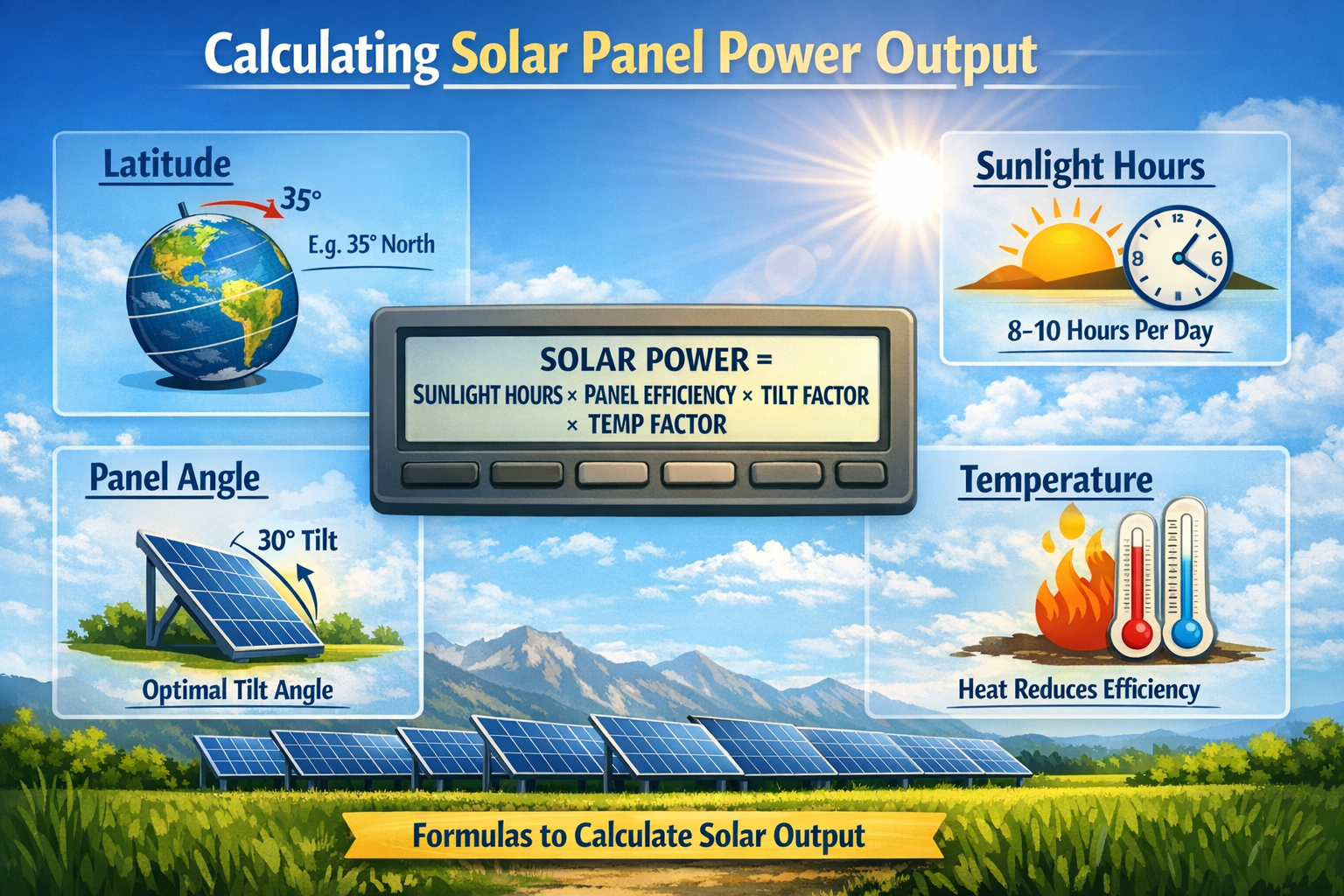
📐 기본 태양광 출력 방정식
광전지의 에너지 출력을 추정하기 위해 널리 사용되는 공식 (PV) 시스템은 다음과 같습니다 [1]:
그러나, 특정 변수를 더 잘 통합하기 위해, 이를 더 자세한 형태로 확장할 수 있습니다., 일반적으로 시스템 크기 조정에 사용되며 NREL의 PVWatts와 같은 인정된 모델에서 구현됩니다. [4]:
이 확장된 방정식의 각 항을 정의해 보겠습니다. [4, 8]:
- 피PV : 총 에너지 출력 (kWh 단위) 일정 기간 동안 (예를 들면, 일일, 월간 간행물, 또는 매년) 아니면 출력이 (W에서) [4].
- 피stc : 태양광 어레이의 총 정격 전력 (kWdc로) 표준 테스트 조건 하에서 (STC: 방사 조도 1000 W/m², 셀 온도 25°C) [1, 4]. 이것은 “크기” 귀하의 시스템.
- H경사 : 매일, 월간 간행물, 또는 연간 일사량 (kWh/m²) 당신의 태양 전지판에서 (어레이 평면 또는 POA). 이곳은 위도 과 패널 각도 특정 설정이 받는 햇빛을 계산하는 데 사용됩니다. [5, 7].
- 에프온도 : 온도 경감 요인 (사이의 소수점 0 과 1). 이는 태양광 패널의 셀 온도가 25°C 이상으로 상승함에 따라 효율성이 저하되는 이유입니다. [1, 2, 8].
- 에프다른 : 다른 모든 시스템 손실에 대한 결합된 요소 (사이의 소수점 0 과 1). 여기에는 오염이 포함됩니다. (먼지), 농담, 배선 손실, 인버터 효율, 그리고 더 [1, 4].
🔍 주요 구성 요소 분석
이 방정식이 작동하도록 하려면, 에 대한 특정 값을 결정해야 합니다.H티나는그건 그리고에프티과엠피.
1. 기울어진 표면에 조사 ()
이게 가장 복잡한 부분이에요, 귀하의 위치를 결합하므로 (위도) 그리고 패널 각도. 특정 위치의 연간 최적 고정 경사각은 종종 위도에 따라 근사화됩니다. [5]. 그러나, 최대의 정확성을 위해, 좀 더 섬세한 접근이 필요하다.
- 고정된 기울기 각도: The “황금률” 위도와 동일하게 기울기 각도를 설정하는 것입니다. 예를 들면, 위도 35°N에서, 패널은 종종 35° 기울어져 설치됩니다. [5].
- 계산 중 H경사: 기울어진 평면의 조사량을 수동으로 계산하는 것은 복잡합니다.. 수평 태양 복사 데이터를 직접 및 확산 구성 요소로 분할한 다음 이를 경사면으로 변환해야 합니다. [7]. 이런 이유로, 전문가들은 유럽연합 집행위원회와 같은 도구를 사용합니다. PVGIS (태양광 지리정보 시스템) [3] 또는 NREL PV 와트 미국에서 [4]. 위치를 입력하여 (위도/경도), 패널 기울기, 및 오리엔테이션 (방위각), 이러한 도구는 다음에 대한 정확한 값을 제공합니다. 기울임. 최신 접근 방식에서는 기계 학습을 사용하여 기존 등방성 모델에 비해 이러한 추정의 정확도를 향상시키기도 합니다. [7].
2. 온도 경감 요인 (에프티과엠피)
태양광 패널은 뜨거워지면 덜 효율적으로 작동합니다.. 이 요소는 이 효과를 수정합니다. [1, 2]. 공식, PVWatts와 같은 모델에서 구현됨, 이 다음과 같이 [4, 8]:
- 기음 : 제조사가 제공하는 전력온도계수. 결정질 실리콘의 경우, 그것은 일반적으로 다음과 같이 표현됩니다. %/° C 그리고 부정적이다 [6, 10].
- 티세포 : 예상 작동 셀 온도 (° C). 보다 정교한 모델은 풍속과 복사조도도 고려합니다. [1, 9].
- 티stc : 표준 테스트 조건에서의 셀 온도 (STC), 그건 항상 25° C [4].
예를 들면, 업계 데이터에 따르면, 모듈의 경우기음=−0.4%/°C, 티셀=65°C, 과Tstc=25°C, 전력 손실이 상당하다 [6]. 계산은:
이는 패널이 다음 단계에서만 작동함을 의미합니다. 84% 고온으로 인해 정격 출력이.
일반적인 온도 계수 (기음) 가치
아래 표는 다양한 패널 기술의 일반적인 값을 나타냅니다., 연구 및 업계 데이터를 기반으로 [2, 6, 10]:
| 패널 기술 | 일반적인 온도 계수 (기음) | 참고 |
|---|---|---|
| 단결정 실리콘 (이전 BSF) | -0.45% 에 -0.50% /° C | 온도 손실이 더 높은 오래된 기술 [6]. |
| 단결정 실리콘 (모던 미닛) | -0.35% 에 -0.40% /° C | 성능이 향상된 공통 기술 [6]. |
| 단결정 실리콘 (N형 TOPCon) | -0.29% 에 -0.35% /° C | 매우 우수한 계수를 갖춘 고급 기술 [6]. |
| 단결정 실리콘 (HJT – 이종접합) | -0.25% 에 -0.30% /° C | 최고의 계수를 갖춘 프리미엄 기술 [6]. |
| 다결정 실리콘 | -0.40% 에 -0.50% /° C | 오래된 기술, 일반적으로 더 높은 계수 [6]. |
| 박막 (CdTe) | -0.24% 에 -0.25% /° C | 열에서 매우 우수한 성능 [6]. |
| 현장에서 사용되는 모듈 | -0.5% /° C (에 대해) | 오래된 모듈에 대한 측정을 통해 이러한 규모가 확인되었습니다. [2]. |
3. 기타 경감 요인 (에프o티H~이다)
이는 현실 세계의 비효율성을 모두 잡아낸 것입니다.. 잘 설계된 시스템의 일반적인 값은 다음과 같습니다.0.75 에 0.85 [1]. 개별 요소를 곱하여 계산할 수 있습니다. [4].
💡 실제적인 예
이를 단순화된 연간 추정치로 결합해 보겠습니다.1 kWdc 시스템 PVWatts 공식을 사용하여 [4, 8].
- 어레이 전력 (피stc): 1 kWdc
- 기울어진 조사 (H경사): PVGIS와 같은 온라인 도구를 사용했다고 가정해 보겠습니다. [3] 특정 위도와 선택한 기울기에 따라. 이 도구는 연간 H경사 으로 1700 kWh/m².
- 온도 요인 (에프온도): 해당 지역의 기후 및 패널 사양을 기준으로 합니다. (예를 들면, 기음=−0.4%/°C [6]), 연간 평균을 계산하면 ftemp의 0.90.
- 기타 손실 (에프다른): 다음의 결합 요인을 추정합니다. 0.80 인버터 손실에 대한, 오염, 배선, 등. [1, 4].
예상 연간 에너지 생산량 (피피에) 될 것이다 [4]:피피에=1kWdc×1700kWh/m²×0.90×0.80=1224kWh
이는 귀하의 1 kWdc 시스템은 약 1224 이러한 조건에서 연간 전력 kWh.
🧠 가장 정확한 결과를 위한 권장사항
- 전문 도구 사용: 가장 신뢰할 수 있는 사람을 위해 가치, 다음과 같은 확립된 도구를 사용하는 것이 좋습니다. PVGIS [3] 또는 PV 와트 [4]. 태양 위치와 방사선 변환의 복잡한 기하학을 처리합니다. [7].
- 데이터시트를 참조하세요: 온도 계수에 대한 가장 정확한 값 (기음) 사용 중인 특정 태양광 패널 모델에 대한 제조업체의 데이터시트에서 항상 제공됩니다. [6, 10]. 찾아보세요 “Pmax의 온도 계수” 또는 “전력 온도 계수”.
- 품질 입력 데이터 수집: 방정식의 정확성은 입력 내용에 따라 달라집니다.. 평균 온도와 패널의 정확한 기술 세부정보에 대한 현장별 데이터를 사용하세요. [1, 2, 9].
📚 참고문헌 목록
[1] MDPI (2022). 열 전달 계산 모델을 통한 태양광 모듈 온도 및 효율에 대한 암시적 방정식.MDPI
[2] NIH : 국립보건원 (2023). 표 3: 평균 온도 계수 3 현장 노후화된 PV 모듈.헬리온
[3] 실리트 (날짜가 기재되지 않은). PV-GIS: 유럽의 PV 잠재력 계산을 위한 웹 기반 태양 복사 데이터베이스입니다.실리트
[4] NREL (2013). PVWatts 버전 1 기술 참조.국립재생에너지연구소 (NREL)
[5] 포옹하는 얼굴 (날짜가 기재되지 않은). Fiacre/PV-system-expert-500 · 데이터 세트.포옹하는 얼굴
[6] 통웨이 (2025). 모노 실리콘 태양 전지 패널 효율 丨 온도 계수, 저조도 성능, 감쇠율.통웨이 주식회사, (주).
[7] 에너지 전환 및 관리 (2024). 수평 측정을 통해 기울어진 표면의 월간 태양 복사량을 추정하기 위한 범용 도구: 기계 학습 접근 방식.에너지 전환 및 관리
[8] pvlib-python 문서 (날짜가 기재되지 않은). pvlib.pvsystem.pvwatts_dc.문서 읽기
[9] UNT 디지털 도서관 (1981). 태양광/열 복합 시스템의 분석 및 실험 시스템 연구. 기술현황 보고 아니요. 12. 노스텍사스대학교
[10] IEEE (1997). PV 모듈 및 어레이의 온도 계수: 측정 방법, 어려움, 그리고 결과.제26회 IEEE 태양광 전문가 컨퍼런스 회의록