
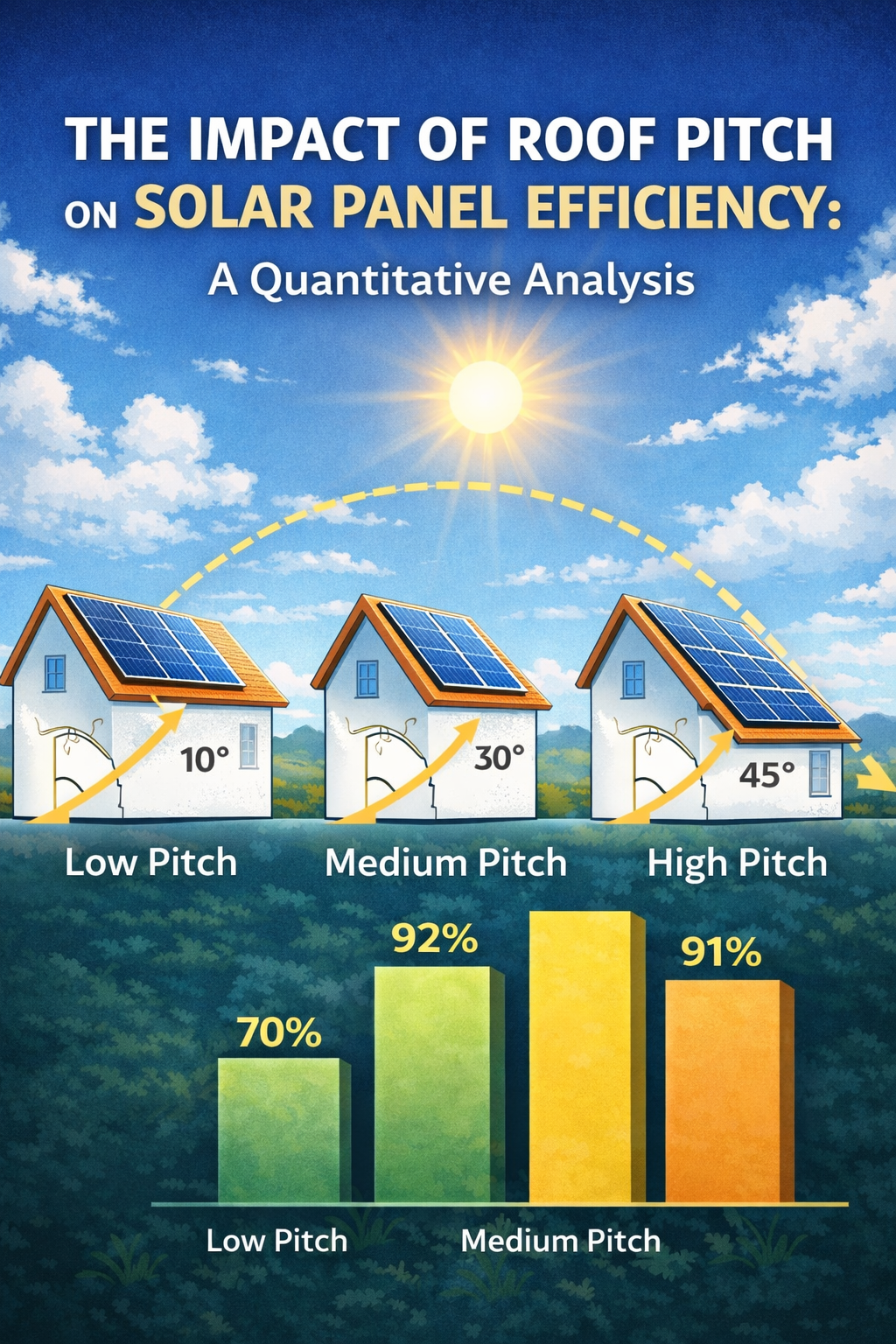
🌞 Introdução: A Geometria da Captura de Energia Solar
A relação fundamental entre a orientação de um painel solar e a sua produção de energia é regida por princípios básicos de geometria e radiação solar.. Quando a luz solar atinge um painel em um ângulo perpendicular, a densidade de energia é maximizada, e o painel opera em sua eficiência máxima teórica [1]. À medida que o ângulo de incidência se desvia da perpendicular, o mesmo fluxo solar é distribuído por uma área de superfície maior, reduzindo a intensidade da radiação por unidade de área e, conseqüentemente, diminuindo a produção de energia [2].
Para sistemas fotovoltaicos montados fixamente, o objetivo é identificar o ângulo de inclinação ideal que maximiza a captura anual de energia. Este ângulo ideal é determinado principalmente pela latitude geográfica, com a regra geral sugerindo que definir a inclinação igual à latitude otimiza a produção durante todo o ano [3]. Ajustes sazonais podem ser feitos adicionando 10-15 graus para favorecer a produção de inverno, quando o caminho do sol é mais baixo, ou subtraindo 10-15 graus para melhorar a geração de verão [4].
Contudo, instalações residenciais e comerciais em telhados enfrentam uma restrição inerente: a inclinação do telhado existente determina o ângulo de inclinação disponível. Esta limitação introduz a questão crítica abordada nesta análise: quanta energia é perdida quando o ângulo do telhado se desvia da inclinação ideal?
📐 A Estrutura Matemática: Radiação Solar em Superfícies Inclinadas
Para quantificar a relação entre o ângulo do telhado e a produção de energia, devemos primeiro estabelecer as equações governantes para a radiação solar incidente em uma superfície inclinada. Embora modelos abrangentes considerem a radiação difusa do céu e os componentes refletidos no solo, o fator dominante é normalmente a radiação de feixe direto [5].
Uma expressão simplificada que relaciona a radiação em um módulo inclinado com aquela em uma superfície horizontal é dada por:
Onde:
- = radiação solar no módulo inclinado (W/m²)
- = radiação solar em uma superfície horizontal (W/m²)
- um = ângulo de elevação solar (graus acima do horizonte)
- b = ângulo de inclinação do módulo em relação à horizontal (graus) [6]
Esta relação pode ser derivada considerando a radiação incidente perpendicular aos raios solares ():
O objetivo dos painéis inclináveis é maximizar o prazo, aproximando assim a superfície do módulo do alinhamento perpendicular com os raios solares [7]. É importante notar que essas equações normalmente representam condições ao meio-dia solar, quando o sol atinge sua elevação máxima.. Uma análise anual completa requer a integração desses cálculos em toda a trajetória diária e sazonal do Sol. [8].
⚖️ Quantificando a perda de potência: Ângulo do telhado versus inclinação ideal
Quando o ângulo real do telhado () difere da inclinação teoricamente ideal (), o desvio resultante reduz diretamente a radiação incidente e, consequentemente, produção anual de energia. Dados da indústria e estudos de simulação fornecem estimativas quantificáveis dessas perdas.
De acordo com o Laboratório Nacional de Energia Renovável (NREL), desvios de10 graus da inclinação ideal pode reduzir a produção anual de energia em aproximadamente5% , enquanto desvios de20 graus pode resultar em perdas que vão desde10% para 15% [9]. Essas descobertas estão alinhadas com observações práticas de bancos de dados de instalações fotovoltaicas.
Um estudo de simulação detalhado realizado para um local a 31° de latitude norte (comparável a Xangai) examinou a relação entre a inclinação do painel e a perda de eficiência em relação ao ângulo ideal de 31° [10]:
| Ângulo de inclinação do painel | Perda Anual de Eficiência vs.. Ideal (31°) |
|---|---|
| 5° | 3.6% |
| 15° | 0.8% |
| 25° | 0% |
| 30° | 0.5% |
| 40° | 2.7% |
Dados adaptados de simulações de desempenho fotovoltaico na latitude 31° N [10]
A implicação prática dessas descobertas é digna de nota: para desvios dentro de um10-20 faixa de graus do ótimo, a perda anual na produção de energia é tipicamente modesta - entre1% e 5% [11]. Isso explica por que os instaladores solares geralmente aceitam ângulos de inclinação entre 15° e 35° para locais próximos a 30° de latitude., já que as perdas marginais são economicamente justificáveis em comparação com o custo de estruturas de montagem personalizadas [12].
As penalidades mais significativas ocorrem quando os painéis são instalados quase planos ou em inclinações extremas, longe do ideal. Por exemplo, painéis de montagem embutida em um telhado residencial de baixa inclinação (22.5° passo) onde o ângulo ideal é 40° pode resultar em perdas anuais de5-8% em comparação com um sistema de montagem no solo com inclinação ideal [13].
🔍 Fatores Críticos que Afetam o Desempenho do Sistema Solar
Embora o ângulo de inclinação seja um parâmetro de projeto importante, representa apenas um componente de um problema de otimização complexo. Pesquisas indicam que outras variáveis podem exercer influência igual ou maior no rendimento energético final [14].
Orientação (Ângulo Azimutal)
No hemisfério norte, a orientação ideal é o sul verdadeiro. Desvios deste azimute introduzem perdas agravadas quando combinados com inclinação subótima. Simulações demonstram que uma matriz voltada para 30° do sul verdadeiro pode sofrer perdas totais superiores a20% quando a inclinação também não é ideal. No desvio de azimute de 60°, as perdas de geração podem atingir20-30% anualmente [15].
Efeitos de sombreamento
O sombreamento parcial representa uma das ameaças mais significativas ao desempenho do sistema. Mesmo o sombreamento mínimo em um único painel pode provocar perdas desproporcionais em toda uma cadeia devido à configuração elétrica dos módulos conectados em série. Estudos documentam reduções de eficiência relacionadas ao sombreamento de10% ou mais em instalações residenciais urbanas [16].
Qualidade e Manutenção da Instalação
Estudos de campo revelam que fatores práticos de instalação impactam substancialmente o desempenho realizado. Conexões elétricas ruins, dimensionamento abaixo do ideal do inversor, e incompatibilidade de tensão podem reduzir coletivamente a saída do sistema. Além disso, A sujeira causada pelo acúmulo de poeira e detritos foi medida para diminuir a geração em até5% em ambientes urbanos, com perdas maiores em regiões áridas ou agrícolas [17].
📊 Conclusão: Implicações práticas para design de sistema
A relação entre a inclinação do telhado e a eficiência do painel solar é governada por princípios geométricos bem estabelecidos, expressos através de equações de radiação solar.. Embora combinar o ângulo do telhado com a inclinação ideal teoricamente maximiza a produção, os dados disponíveis demonstram que desvios moderados resultam em perdas anuais surpreendentemente modestas – normalmente 1-5% para ângulos entre 15-20° do ideal.
Essas descobertas têm implicações práticas para instalações solares residenciais e comerciais: o benefício incremental de alcançar uma inclinação perfeita é muitas vezes compensado pelo custo dos sistemas de estantes personalizados, particularmente quando comparado com instalações embutidas em estruturas de telhado existentes. Uma abordagem holística ao design do sistema que otimiza a orientação, minimiza o sombreamento, e garante que a instalação de qualidade produzirá maiores ganhos de desempenho a longo prazo do que buscar um ângulo de inclinação perfeito às custas de outros fatores [18].
Este artigo foi gerado pela IA sob a supervisão de um adulto 😉
📚 Referências
[1] Duffy, J. A., & Beckman, Em. A. (2013). Engenharia Solar de Processos Térmicos (4ª edição.). John Wiley & Filhos, pp. 12-15.
[2] Mestres, G. M. (2004). Sistemas de energia elétrica renováveis e eficientes. John Wiley & Filhos, pp. 385-390.
[3] Laboratório Nacional de Energia Renovável. (2021). “Noções básicas de radiação solar.” Relatório Técnico NREL, Dourado, CO.
[4] Jacobson, M. Z., & Jadhav, Em. (2018). “Estimativas mundiais de ângulos de inclinação ideais para PV e proporções de luz solar incidente sobre painéis fotovoltaicos inclinados e rastreados em relação a painéis horizontais.” Energia solar, 169, pp. 55-66.
[5] Liu, B. E. H., & Jordânia, R. C. (1963). “O desempenho médio de longo prazo de coletores de energia solar de placa plana.” Energia solar, 7(2), pp. 53-74.
[6] Honsberg, C., & Bowden, S. (2019). “Site de educação fotovoltaica.” PVEducation.org, Seção: “Radiação solar em superfícies inclinadas.”
[7] Mensageiro, R. A., & Barriga, J. (2010). Engenharia de Sistemas Fotovoltaicos (3terceira edição.). CRC Press, pp. 45-49.
[8] Fazer, M., & Kleissl, J. (2011). “Orientações fixas ideais e benefícios do rastreamento para captura de radiação solar no território continental dos Estados Unidos.” Energias Renováveis, 36(3), pp. 1145-1152.
[9] Laboratório Nacional de Energia Renovável. (2020). “Calculadora de PVWatts: Documentação Metodológica.” NREL/TP-6A20-6858, Dourado, CO.
[10] Sol, E., et al. (2018). “Ângulo de inclinação ideal para sistemas fotovoltaicos em diferentes zonas climáticas.” Processo Energético, 152, pp. 116-121.
[11] Rowland, Eu. H., Kemery, B. P., & Beausoleil-Morrison, Eu. (2011). “Ângulo de inclinação e azimute ideais para energia solar fotovoltaica: Um Ontário (Canadá) estudo de caso.” Política Energética, 39(3), pp. 1397-1409.
[12] Conselho de Energia Limpa. (2020). “Diretrizes de instalação de sistemas solares fotovoltaicos conectados à rede.” Governo Australiano, pp. 23-25.
[13] Kaldellis, J. K., & Zafirakis, D. (2012). “Investigação experimental dos painéis fotovoltaicos ótimos’ ângulo de inclinação durante o período de verão.” Energia, 38(1), pp. 305-314.
[14] Agência Internacional de Energia. (2019). “Projeto e Operação de Sistemas Fotovoltaicos.” Tarefa IEA-PVPS 13 Relatório, T13-12:2019.
[15] Hartner, M., et al. (2015). “Leste para oeste – O ângulo de inclinação e orientação ideais dos painéis fotovoltaicos na perspectiva do sistema elétrico.” Energia Aplicada, 160, pp. 94-107.
[16] Delinear, C., et al. (2013). “Uma análise econômica e de desempenho da eletrônica de potência distribuída em sistemas fotovoltaicos.” Relatório Técnico NREL, TP-5200-50003.
[17] Maghami, M. R., et al. (2016). “Perda de energia devido a sujeira no painel solar: Uma revisão.” Avaliações de energia renovável e sustentável, 59, pp. 1307-1316.
[18] Lucas, A., & Hegedus, S. (2011). Manual de Ciência e Engenharia Fotovoltaica (2ª ed.). John Wiley & Filhos, pp. 905-940.