
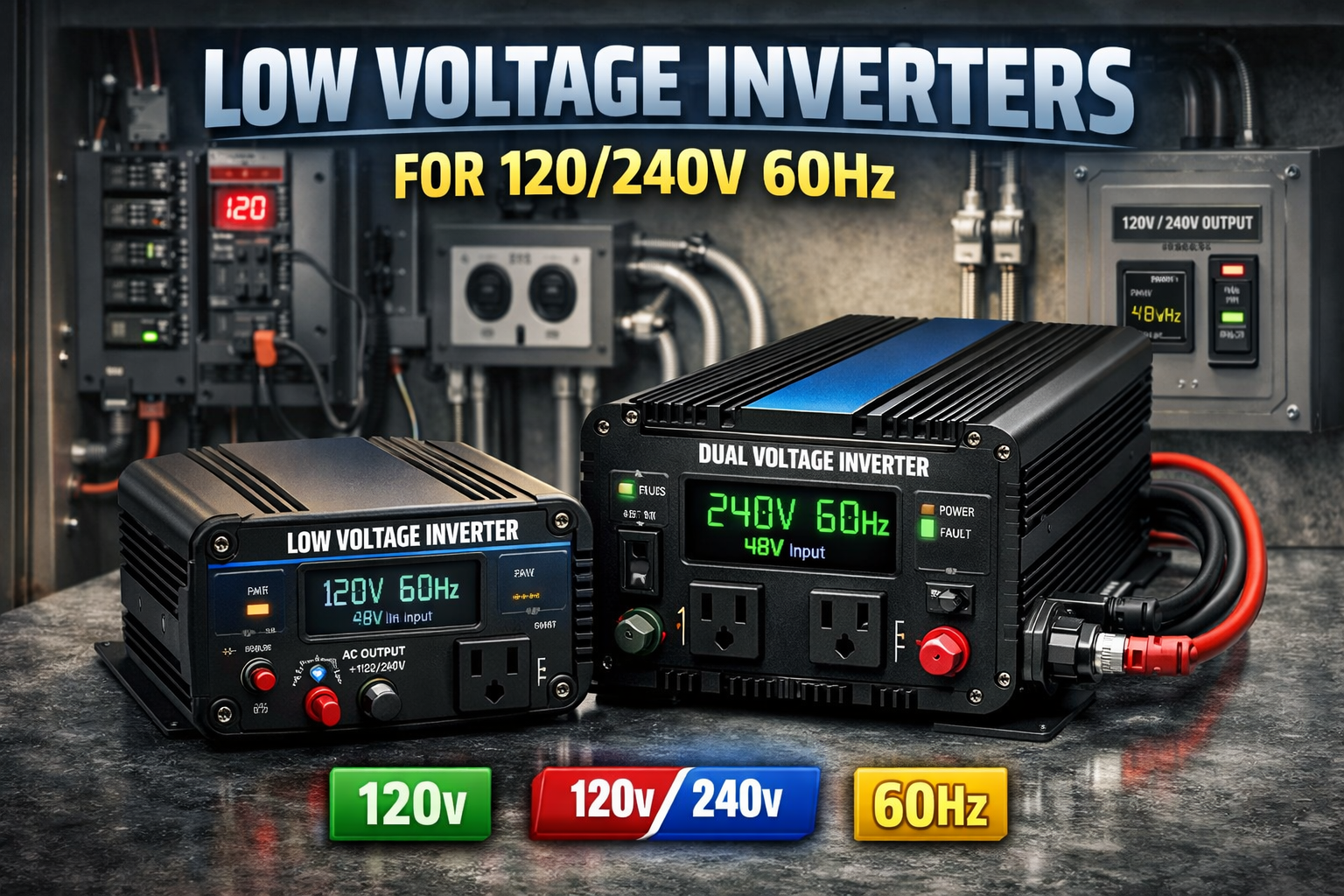
Bajo voltaje (LV) Los inversores que se pueden conectar a sistemas de 120/240 V 60 Hz se utilizan comúnmente en residencial., comercial, y aplicaciones industriales. Estos inversores convierten la energía CC (de fuentes como baterías o paneles solares) a alimentación de CA compatible con los sistemas eléctricos estándar de América del Norte. A continuación se muestra una lista de inversores LV populares que admiten salida de 120/240 V 60 Hz.:
1. SolarEdge SE7600H-US (Inversor de onda HD)
-
Voltaje de entrada: 120/240V CA
-
Voltaje de salida: 120/240V CA, 60Hz
-
Clasificación de potencia: 7.6 kW
-
Características:
-
Alta eficiencia (hasta 99%).
-
Tecnología HD-Wave para un diseño ligero y compacto.
-
Optimizado para sistemas solares..
-
-
Caso de uso: Instalaciones solares residenciales y comerciales..
-
Sitio web: solaredge.com
2. Microinversores Enphase IQ8
-
Voltaje de entrada: CC de bajo voltaje (de paneles solares).
-
Voltaje de salida: 120/240V CA, 60Hz.
-
Clasificación de potencia: Hasta 300W por microinversor.
-
Características:
-
Diseño modular (un inversor por panel solar).
-
Capacidad de formación de red para operación fuera de la red.
-
Alta confiabilidad y capacidades de monitoreo.
-
-
Caso de uso: Sistemas solares residenciales.
-
Sitio web: enphase.com
3. Serie Schneider Electric Conext SW
-
Voltaje de entrada: 12En, 24En, o 48 VCC.
-
Voltaje de salida: 120/240V CA, 60Hz.
-
Clasificación de potencia: 3.5 kW a 6 kW.
-
Características:
-
Salida de onda sinusoidal pura.
-
Interruptor de transferencia incorporado para uso conectado a la red o fuera de la red.
-
Compatible con sistemas solares y de baterías..
-
-
Caso de uso: Sistemas solares híbridos y fuera de la red.
-
Sitio web: schneider-electric.com
4. Serie Outback Power Radian
-
Voltaje de entrada: 48En DC.
-
Voltaje de salida: 120/240V CA, 60Hz.
-
Clasificación de potencia: 4 kW a 8 kW (apilable para mayor potencia).
-
Características:
-
Conexión a la red, fuera de la red, y capacidades híbridas.
-
Alta capacidad de sobretensión para cargas pesadas.
-
Compatible con los sistemas de almacenamiento de energía de Outback.
-
-
Caso de uso: Sistemas híbridos y fuera de la red.
-
Sitio web: outbackpower.com
5. Inversores SMA Sunny Boy
-
Voltaje de entrada: CC de bajo voltaje (de paneles solares).
-
Voltaje de salida: 120/240V CA, 60Hz.
-
Clasificación de potencia: 3.8 kW a 7.7 kW.
-
Características:
-
Alta eficiencia (hasta 97.5%).
-
Monitoreo web integrado.
-
Diseño robusto para uso en exteriores.
-
-
Caso de uso: Sistemas solares residenciales y comerciales..
-
Sitio web: sma-america.com
6. Victron Energy MultiPlus-II
-
Voltaje de entrada: 12En, 24En, o 48 VCC.
-
Voltaje de salida: 120/240V CA, 60Hz.
-
Clasificación de potencia: 3 kW a 5 kW.
-
Características:
-
Salida de onda sinusoidal pura.
-
Cargador incorporado e interruptor de transferencia..
-
Capacidad en paralelo y trifásico.
-
-
Caso de uso: Fuera de la red, marina, y aplicaciones para vehículos recreativos.
-
Sitio web: victronenergia.com
7. Primera serie de Fronius
-
Voltaje de entrada: CC de bajo voltaje (de paneles solares).
-
Voltaje de salida: 120/240V CA, 60Hz.
-
Clasificación de potencia: 3.8 kW a 7.6 kW.
-
Características:
-
Alta eficiencia (hasta 98.1%).
-
Wi-Fi integrado para monitoreo.
-
Diseño a presión para una fácil instalación.
-
-
Caso de uso: Sistemas solares residenciales.
-
Sitio web: fronius.com
8. Serie Magnum Energy MS-PAE
-
Voltaje de entrada: 12En, 24En, o 48 VCC.
-
Voltaje de salida: 120/240V CA, 60Hz.
-
Clasificación de potencia: 4.4 kW a 6 kW.
-
Características:
-
Salida de onda sinusoidal pura.
-
Interruptor de transferencia incorporado.
-
Compatible con sistemas solares y de baterías..
-
-
Caso de uso: Sistemas híbridos y fuera de la red.
-
Sitio web: magnum-dimensions.com
9. Serie MIN de Growatt
-
Voltaje de entrada: CC de bajo voltaje (de paneles solares).
-
Voltaje de salida: 120/240V CA, 60Hz.
-
Clasificación de potencia: 3 kW a 6 kW.
-
Características:
-
Alta eficiencia (hasta 98.1%).
-
Wi-Fi incorporado para monitoreo.
-
Diseño compacto y ligero.
-
-
Caso de uso: Sistemas solares residenciales.
-
Sitio web: growatt.com
10. Inversor Tesla Powerwall
-
Voltaje de entrada: CC de bajo voltaje (de la batería Powerwall).
-
Voltaje de salida: 120/240V CA, 60Hz.
-
Clasificación de potencia: 5 kilovatios continuos, 7 kW pico.
-
Características:
-
Integrado con batería Tesla Powerwall.
-
Energía de respaldo perfecta durante cortes.
-
Compatibilidad solar y de red.
-
-
Caso de uso: Almacenamiento de energía residencial y sistemas solares..
-
Sitio web: tesla.com/powerwall
Consideraciones clave al elegir un inversor
-
Requisitos de energía: Haga coincidir la potencia nominal del inversor con sus requisitos de carga.
-
Tipo de sistema: Garantice la compatibilidad con su sistema (corbata, fuera de la red, o híbrido).
-
Eficiencia: Los inversores de mayor eficiencia ahorran energía y reducen costes.
-
Monitoreo y Control: Busque inversores con funciones de monitoreo y control remotos.
-
Garantía y soporte: Elija marcas de renombre con buenas garantías y atención al cliente..
Contenido redactado con asistencia de IA y validado por el autor en base a 30 años de experiencia en el campo de la Calidad de Energía.