
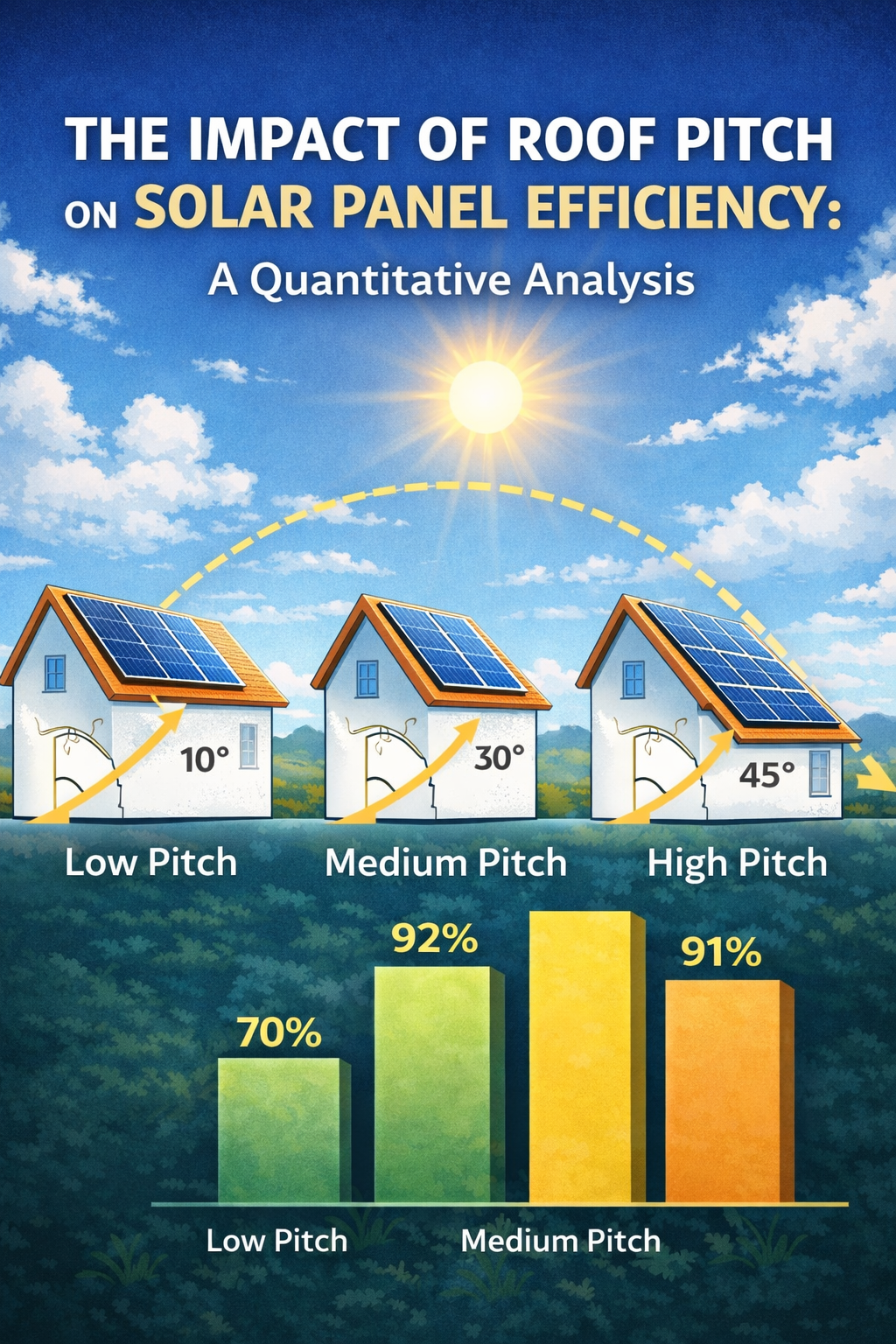
🌞 مقدمة: هندسة التقاط الطاقة الشمسية
تخضع العلاقة الأساسية بين اتجاه الألواح الشمسية وإنتاجها للطاقة للمبادئ الأساسية للهندسة والإشعاع الشمسي. عندما يضرب ضوء الشمس لوحة بزاوية متعامدة, يتم تعظيم كثافة الطاقة, وتعمل اللوحة بأقصى كفاءتها النظرية [1]. حيث أن زاوية السقوط تنحرف عن العمودي, ويتم توزيع نفس التدفق الشمسي على مساحة سطحية أكبر, تقليل شدة الإشعاع لكل وحدة مساحة وبالتالي تقليل إنتاج الطاقة [2].
للأنظمة الكهروضوئية الثابتة, الهدف هو تحديد زاوية الميل المثالية التي تزيد من التقاط الطاقة السنوية. يتم تحديد هذه الزاوية المثالية بشكل أساسي من خلال خط العرض الجغرافي, مع القاعدة العامة التي تشير إلى أن ضبط الميل مساويًا لخط العرض يؤدي إلى تحسين الإنتاج على مدار العام [3]. يمكن إجراء التعديلات الموسمية عن طريق الإضافة 10-15 درجات لصالح الإنتاج الشتوي عندما يكون مسار الشمس أقل, أو الطرح 10-15 درجات لتعزيز جيل الصيف [4].
لكن, تواجه المنشآت السكنية والتجارية على الأسطح قيودًا متأصلة: تملي درجة السقف الحالية زاوية الميل المتاحة. يقدم هذا القيد السؤال الحاسم الذي يتناوله هذا التحليل: مقدار الطاقة المفقودة عندما تنحرف زاوية السقف عن الميل الأمثل?
📐 الإطار الرياضي: الإشعاع الشمسي على الأسطح المائلة
لتحديد العلاقة بين زاوية السقف وانتاج الطاقة, يجب علينا أولاً إنشاء المعادلات الحاكمة لحادثة الإشعاع الشمسي على سطح مائل. بينما تمثل النماذج الشاملة إشعاع السماء المنتشر والمكونات المنعكسة عن الأرض, العامل المهيمن عادة هو إشعاع الحزمة المباشرة [5].
يتم إعطاء تعبير مبسط يربط الإشعاع الموجود على وحدة مائلة بالإشعاع الموجود على سطح أفقي بواسطة:
حيث:
- = الإشعاع الشمسي على الوحدة المائلة (ث / م²)
- = الإشعاع الشمسي على سطح أفقي (ث / م²)
- أ = زاوية الارتفاع الشمسية (درجات فوق الأفق)
- ب = زاوية ميل الوحدة من الأفقي (درجات) [6]
ويمكن استخلاص هذه العلاقة من خلال النظر إلى الحادث الإشعاعي المتعامد مع أشعة الشمس ():
الهدف من إمالة الألواح هو تعظيم شرط, وبالتالي جعل سطح الوحدة أقرب إلى المحاذاة العمودية مع أشعة الشمس [7]. ومن المهم أن نلاحظ أن هذه المعادلات تمثل عادة الظروف عند الظهيرة الشمسية عندما تصل الشمس إلى أقصى ارتفاع لها. ويتطلب التحليل السنوي الكامل دمج هذه الحسابات على كامل المسار اليومي والموسمي للشمس [8].
⚖️ قياس فقدان الطاقة: زاوية السقف مقابل الميل الأمثل
عندما زاوية السقف الفعلية () يختلف عن الميل الأمثل من الناحية النظرية (), الانحراف الناتج يقلل بشكل مباشر من الإشعاع الحادث و, بالتالي, إنتاج الطاقة السنوي. وتوفر بيانات الصناعة ودراسات المحاكاة تقديرات كمية لهذه الخسائر.
بحسب المختبر الوطني للطاقة المتجددة (المختبر الوطني), انحرافات10 درجات من الميل الأمثل يمكن أن يقلل إنتاج الطاقة السنوي تقريبًا5% , بينما الانحرافات20 درجات قد يؤدي إلى خسائر تتراوح بين10% إلى 15% [9]. تتوافق هذه النتائج مع الملاحظات العملية من قواعد بيانات التركيب الكهروضوئية.
أجريت دراسة محاكاة تفصيلية لموقع يقع عند خط عرض 31 درجة شمالاً (قابلة للمقارنة مع شنغهاي) فحص العلاقة بين إمالة اللوحة وفقدان الكفاءة بالنسبة للزاوية المثالية البالغة 31 درجة [10]:
| زاوية ميل اللوحة | خسارة الكفاءة السنوية مقابل. أفضل (31°) |
|---|---|
| 5° | 3.6% |
| 15° | 0.8% |
| 25° | 0% |
| 30° | 0.5% |
| 40° | 2.7% |
البيانات مقتبسة من عمليات محاكاة الأداء الكهروضوئي عند خط عرض 31 درجة شمالاً [10]
إن الآثار العملية لهذه النتائج جديرة بالملاحظة: للانحرافات داخل أ10-20 نطاق الدرجة من الأمثل, عادة ما تكون الخسارة السنوية في إنتاج الطاقة متواضعة - ما بين1% و 5% [11]. وهذا ما يفسر سبب قبول مثبتات الطاقة الشمسية عادةً لزوايا الميل بين 15 درجة و35 درجة للمواقع القريبة من خط عرض 30 درجة, حيث أن الخسائر الهامشية مبررة اقتصاديًا مقارنة بتكلفة هياكل التركيب المخصصة [12].
تحدث العقوبات الأكثر أهمية عندما يتم تركيب الألواح بشكل مسطح تقريبًا أو بميل شديد بعيدًا عن المستوى الأمثل. مثلا, ألواح تركيب متساطحة على سطح سكني منخفض الانحدار (22.5° الملعب) حيث الزاوية المثلى هي 40 درجة يمكن أن تؤدي إلى خسائر سنوية قدرها5-8% مقارنة بنظام التثبيت الأرضي المائل على النحو الأمثل [13].
🔍 العوامل الحاسمة التي تؤثر على أداء النظام الشمسي
في حين أن زاوية الميل هي معلمة تصميم مهمة, فهو يمثل مكونًا واحدًا فقط من مشكلة التحسين المعقدة. تشير الأبحاث إلى أن المتغيرات الأخرى يمكن أن تمارس تأثيرًا مساويًا أو أكبر على إنتاج الطاقة النهائي [14].
توجيه (زاوية السمت)
في نصف الكرة الشمالي, التوجه الأمثل هو الجنوب الحقيقي. تؤدي الانحرافات عن هذا السمت إلى خسائر مضاعفة عندما تقترن بإمالة دون المستوى الأمثل. تُظهر عمليات المحاكاة أن المصفوفة التي تواجه 30 درجة قبالة الجنوب الحقيقي يمكن أن تتعرض لخسائر إجمالية تتجاوز ذلك20% عندما يكون الميل أيضًا غير مثالي. عند انحراف السمت 60 درجة, قد تصل خسائر الجيل20-30% سنويا [15].
تأثيرات التظليل
يمثل التظليل الجزئي أحد أهم التهديدات التي تواجه أداء النظام. حتى الحد الأدنى من التظليل على لوحة واحدة يمكن أن يؤدي إلى خسائر غير متناسبة عبر السلسلة بأكملها بسبب التكوين الكهربائي للوحدات المتصلة بالسلسلة. توثق الدراسات تخفيضات الكفاءة المرتبطة بالتظليل10% أو أكثر في المنشآت السكنية الحضرية [16].
جودة التركيب والصيانة
تكشف الدراسات الميدانية أن عوامل التثبيت العملية تؤثر بشكل كبير على الأداء المحقق. التوصيلات الكهربائية سيئة, تحجيم العاكس دون المستوى الأمثل, وعدم تطابق الجهد يمكن أن يؤدي بشكل جماعي إلى تقليل خرج النظام. علاوة على ذلك, تم قياس التلوث الناتج عن تراكم الغبار والحطام لتقليل التوليد بنسبة تصل إلى5% في البيئات الحضرية, مع ارتفاع الخسائر في المناطق القاحلة أو الزراعية [17].
📊 اختتام: الآثار العملية لتصميم النظام
تخضع العلاقة بين درجة السقف وكفاءة الألواح الشمسية لمبادئ هندسية راسخة يتم التعبير عنها من خلال معادلات الإشعاع الشمسي. بينما تعمل مطابقة زاوية السقف مع الإمالة المثالية على زيادة الإنتاج نظريًا, وتظهر البيانات المتاحة أن الانحرافات المعتدلة تؤدي إلى خسائر سنوية متواضعة بشكل مدهش - عادة 1-5% للزوايا ضمن 15-20 درجة من الأمثل.
هذه النتائج لها آثار عملية على منشآت الطاقة الشمسية السكنية والتجارية: غالبًا ما تفوق تكلفة أنظمة الأرفف المخصصة الفائدة الإضافية لتحقيق الإمالة المثالية, خاصة عند مقارنتها بالتركيبات المثبتة على هياكل السقف الحالية. نهج شامل لتصميم النظام الذي يعمل على تحسين التوجه, يقلل من التظليل, ويضمن أن التثبيت عالي الجودة سيحقق مكاسب أكبر في الأداء على المدى الطويل مقارنة بالسعي إلى زاوية إمالة مثالية على حساب عوامل أخرى [18].
تم إنشاء هذه المقالة بواسطة الذكاء الاصطناعي تحت إشراف شخص بالغ 😉
📚 المراجع
[1] دافي, J. A., & بيكمان, في. A. (2013). الهندسة الشمسية للعمليات الحرارية (4الطبعة ال.). جون وايلي & أبناء, ص. 12-15.
[2] الماجستير, G. M. (2004). أنظمة الطاقة الكهربائية المتجددة والفعالة. جون وايلي & أبناء, ص. 385-390.
[3] المختبر الوطني للطاقة المتجددة. (2021). “أساسيات الإشعاع الشمسي.” التقرير الفني لـ NREL, ذهبي, CO.
[4] جاكوبسون, M. ز., & جادهاف, في. (2018). “التقديرات العالمية لزوايا الميل المثالية للطاقة الكهروضوئية ونسب سقوط ضوء الشمس على الألواح الكهروضوئية المائلة والمتعقبة بالنسبة للألواح الأفقية.” طاقة شمسية, 169, ص. 55-66.
[5] ليو, B. و. H., & الأردن, R. C. (1963). “متوسط الأداء على المدى الطويل لمجمعات الطاقة الشمسية المسطحة.” طاقة شمسية, 7(2), ص. 53-74.
[6] هونسبيرج, C., & بودين, S. (2019). “موقع تعليم الطاقة الكهروضوئية.” PVEducation.org, قسم: “الإشعاع الشمسي على الأسطح المائلة.”
[7] رسول, R. A., & بطن, J. (2010). هندسة النظم الكهروضوئية (3الطبعة الثالثة.). لجنة حقوق الطفل الصحافة, ص. 45-49.
[8] يصنع, M., & كليسل, J. (2011). “التوجهات الثابتة المثلى وفوائد التتبع لالتقاط الإشعاع الشمسي في الولايات المتحدة القارية.” الطاقة المتجددة, 36(3), ص. 1145-1152.
[9] المختبر الوطني للطاقة المتجددة. (2020). “حاسبة PVWatts: توثيق المنهجية.” المختبر الوطني/TP-6A20-6858, ذهبي, CO.
[10] شمس, ي., وآخرون. (2018). “زاوية الميل المثلى للأنظمة الكهروضوئية في المناطق المناخية المختلفة.” بروسيديا الطاقة, 152, ص. 116-121.
[11] رولاندز, أنا. H., كيميري, B. P., & بوسولي موريسون, أنا. (2011). “زاوية الميل المثالية للطاقة الشمسية الكهروضوئية والسمت: أونتاريو (كندا) دراسة الحالة.” سياسة الطاقة, 39(3), ص. 1397-1409.
[12] مجلس الطاقة النظيفة. (2020). “إرشادات تركيب أنظمة الطاقة الشمسية الكهروضوئية المتصلة بالشبكة.” الحكومة الأسترالية, ص. 23-25.
[13] كالديليس, J. ك., & زافيراكيس, D. (2012). “دراسة تجريبية للألواح الكهروضوئية المثلى’ زاوية الميل خلال فترة الصيف.” طاقة, 38(1), ص. 305-314.
[14] وكالة الطاقة الدولية. (2019). “تصميم وتشغيل الأنظمة الكهروضوئية.” مهمة IEA-PVPS 13 تقرير, T13-12:2019.
[15] هارتنر, M., وآخرون. (2015). “من الشرق إلى الغرب – زاوية الميل والتوجه الأمثل للألواح الكهروضوئية من منظور نظام الكهرباء.” الطاقة التطبيقية, 160, ص. 94-107.
[16] تحديد, C., وآخرون. (2013). “أداء وتحليل اقتصادي لإلكترونيات الطاقة الموزعة في الأنظمة الكهروضوئية.” التقرير الفني لـ NREL, TP-5200-50003.
[17] مغامي, M. R., وآخرون. (2016). “فقدان الطاقة بسبب الاتساخ على الألواح الشمسية: مراجعة.” مراجعات الطاقة المتجددة والمستدامة, 59, ص. 1307-1316.
[18] لوقا, A., & هيجيدوس, S. (2011). دليل العلوم والهندسة الضوئية (2الطبعة الثانية.). جون وايلي & أبناء, ص. 905-940.