
السلبي مقابل. المرشح التوافقي النشط في مركز البيانات: مقارنة ميدانية – ميروس الدولية
| منشأة | مركز البيانات - مؤسسة مالية كندية, باري, أونتاريو |
| لجنة الاختبار | هندسة ايه دي ام / ميروس الدولية – يوليو 2012 |
| شروط الاختبار | إمدادات احتياطية لمولدات الديزل (أسوأ حالة مصدر ضعيف) |
| أحمال المرشح السلبي | مضخات المياه المبردة - 430 إجمالي الصحة, Lineator AUHF على كل VSD |
| تحميل مرشح نشط | 227 مبرد HP — مرشح توافقي نشط متوازي مدمج |
| النتيجة السلبية — THDv | 0.4% |
| النتيجة السلبية – THDi | 8% |
| النتيجة النشطة — THDi (حمولة كاملة) | > 12% |
| النتيجة النشطة — THDi (انخفاض الحمل) | > 15% |
| IEEE 519 امتثال | سلبي: نعم. نشيط: ليس. |
01 سياق التشغيل: VSDs في مراكز البيانات والنتيجة التوافقية
تعد مراكز البيانات من أكبر مستهلكي الطاقة الكهربائية في القطاع التجاري, وكانت الهدف الأساسي لبرامج كفاءة الطاقة لأكثر من عقد من الزمن. أصبحت محركات الأقراص ذات السرعة المتغيرة شائعة بشكل متزايد في البنية التحتية لتبريد مراكز البيانات - المبردات, مضخات المياه المبردة, مراوح برج التبريد, ومكيفات هواء غرفة الكمبيوتر (CRACs) يستفيد الجميع من التشغيل المتغير السرعة, مما يقلل من استهلاك طاقة المحرك بشكل كبير عند التحميل الجزئي مقارنة ببدائل السرعة الثابتة.[1]
تعتبر فائدة كفاءة استخدام الطاقة في VSDs حقيقية وجوهرية. لكن VSD عبارة عن حمل غير خطي مكون من 6 نبضات يقوم بحقن تيارات توافقية في شبكة الإمداد. في مركز بيانات يحتوي على العديد من وحدات VSD الكبيرة في نظام التبريد, يمكن أن يكون التحميل التوافقي التراكمي كبيرًا - وتعد أحمال مركز البيانات من بين الأكثر حساسية لتشويه الجهد. إمدادات الطاقة الخادم, أنظمة UPS, وأدوات التحكم في التبريد الدقيقة جميعها تعمل بشكل أفضل على الطاقة النظيفة.
في مركز بيانات جديد لمؤسسة مالية كندية في باري, أونتاريو, تم نشر طريقتين للتخفيف التوافقي في نظام التبريد: مرشحات Mirus Lineator AUHF السلبية على جميع محركات مضخات المياه المبردة, ومرشح توافقي نشط متوازي مدمج على 227 مبرد اتش بي. في يوليو 2012, قامت شركة ADM Engineering بالتعاون مع شركة Mirus International لإجراء تقييم ميداني مقارن لكلا النهجين في ظل أسوأ الظروف.[1]
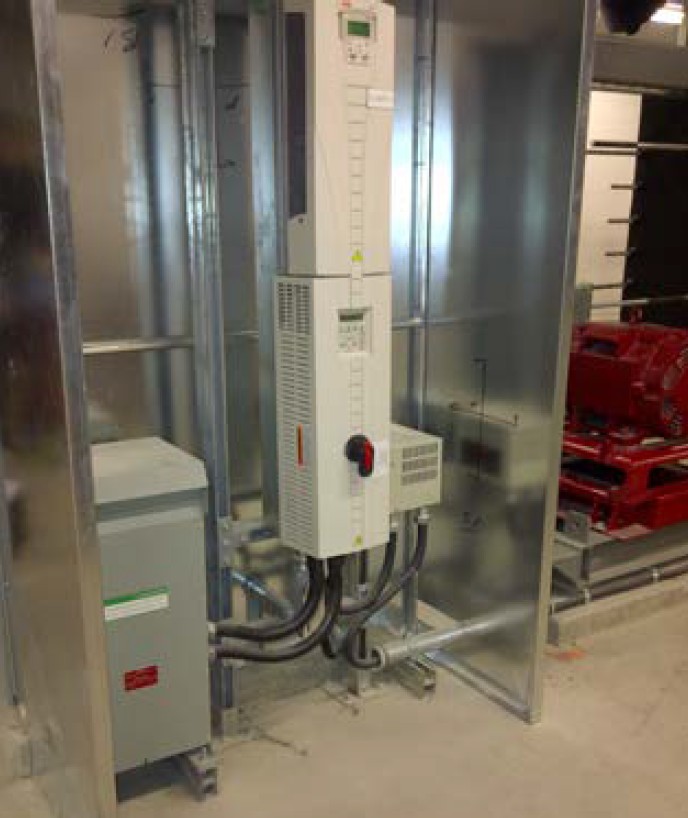
تين. 1. تركيب Lineator AUHF وVSD على مضخة مياه مبردة في مركز بيانات Barrie. تم تطبيق الخطوط على جميع محركات مضخات المياه المبردة بشكل إجمالي 430 HP. مصدر: ميروس الدولية.[1]
02 نتيجة التصفية النشطة: أداء ضعيف بشكل مدهش
2.1 كيف تعمل المرشحات التوافقية النشطة المتوازية
يتصل المرشح التوافقي النشط المتوازي من نوع التحويلة بالتوازي مع الحمل غير الخطي الذي يخففه. يقيس تيار الحمل بشكل مستمر, يستخرج المحتوى التوافقي باستخدام معالجة الإشارات الرقمية, ويحقن تيارًا توافقيًا متساويًا ومعاكسًا في دائرة الإمداد - مما يلغي التيار التوافقي للحمل عند نقطة الاتصال. مبدئيا, هذا هو نهج الإلغاء التوافقي الكامل والمتكيف - على عكس المرشحات السلبية, فهو لا يعتمد على الرنين المضبوط ويستجيب للمحتوى التوافقي المتغير في الوقت الفعلي.[2]
عمليا, يعتمد الأداء بشكل حاسم على دقة وعرض النطاق الترددي للاستشعار الحالي, سرعة ودقة تحويل IGBT الذي يولد تيار التعويض, وعرض النطاق الترددي لحلقة التحكم. تصبح هذه القيود واضحة في القياسات الميدانية، خاصة عند الأوامر التوافقية الأعلى وتحت ظروف الحمل المتفاوتة.
2.2 النتائج المقاسة: مرشح نشط على المبرد
في حمولة التبريد الكاملة, أنتج المرشح التوافقي النشط المدمج تيارًا مقيسًا يتجاوز THDi 12%. وهذه نتيجة سيئة إلى حد مدهش بالنسبة لتكنولوجيا يتم تسويقها خصيصًا للتخفيف التوافقي. عندما تم تخفيض حمل المبرد, تدهور الأداء أكثر — تجاوز THDi 15% في ظروف الحمل المخفضة, مع مكونات توافقية عالية التردد مرئية بوضوح في شكل الموجة الحالية.[1]
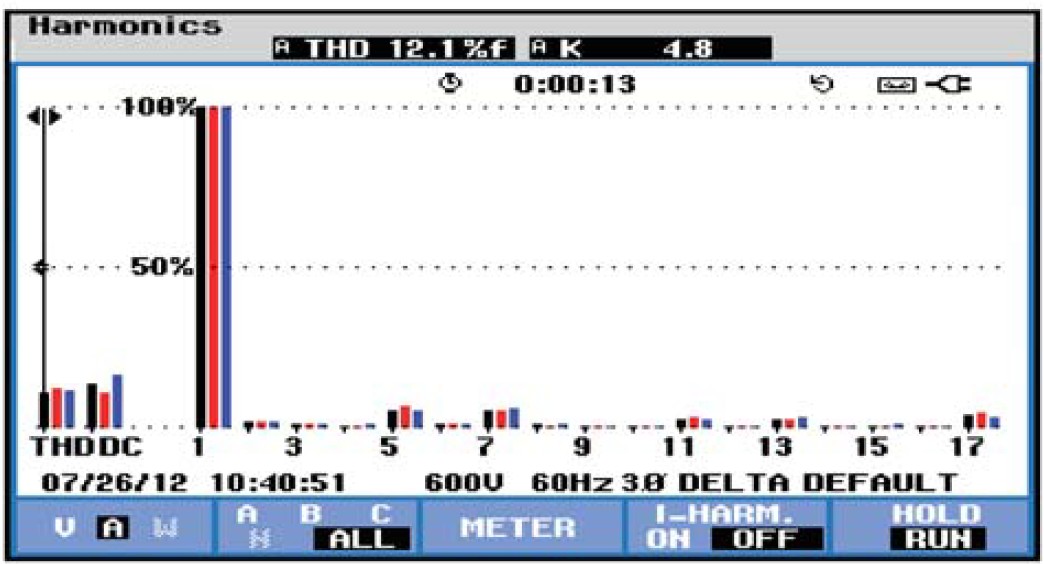
تين. 2ل. مرشح التوافقي النشط للمبرد - حمولة كاملة. ثدي = 12.1%. المكونات التوافقية عالية التردد مرئية في الطيف. مصدر: ميروس الدولية.[1]
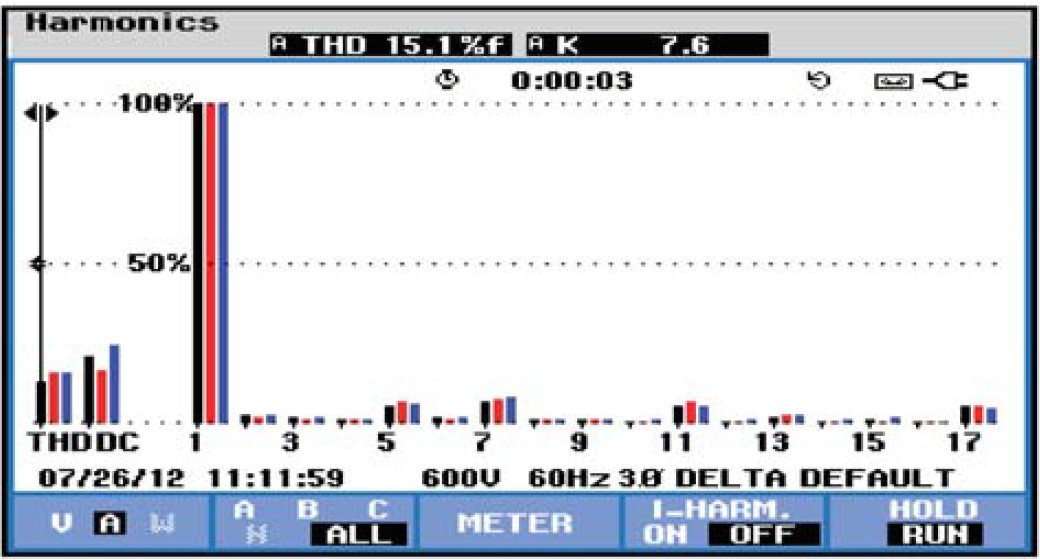
تين. 2ب. مرشح التوافقي النشط للمبرد - حمل منخفض. ثدي = 15.1%. يتدهور الأداء عند التحميل الجزئي — وهو عكس ما يتطلبه تطبيق تبريد مركز البيانات. مصدر: ميروس الدولية.[1]
2.3 لماذا تتحلل المرشحات النشطة عند الحمل الخفيف
يعد تدهور أداء المرشح النشط عند الحمل المنخفض من سمات هذه التقنية. في حمولة كاملة, التيارات التوافقية كبيرة بالنسبة للتيارات الأساسية, مما يجعلها أسهل في الإحساس بدقة وإلغائها بفعالية. في انخفاض الحمل, التيار الأساسي أصغر, التيارات التوافقية أصغر من حيث القيمة المطلقة, وتنخفض نسبة الإشارة إلى الضوضاء في الاستشعار الحالي. تتدهور دقة حلقة التحكم, يصبح التعويض أقل دقة, والمحتوى التوافقي المتبقي - بالإضافة إلى توافقيات تبديل IGBT الخاصة بالمرشح - يهيمن على قياس THDi. وهذا عكس ما هو مطلوب في نظام تبريد مركز البيانات, حيث تختلف الأحمال بشكل مستمر على نطاق واسع.
03 نتيجة التصفية السلبية: IEEE 519 الامتثال بموجب توريد المولدات
تم قياس محركات مضخات المياه المبردة - جميعها مجهزة بمرشحات سلبية من طراز Mirus Lineator AUHF - في ظل نفس ظروف إمداد مولدات الديزل. وكانت النتائج مختلفة بشكل ملحوظ عن قياسات المرشح النشط:[1]
- الجهد THDv في محطات إدخال المضخة: 0.4%
- THDi الحالي في محطات إدخال المضخة: 8%
كلتا القيمتين جيدتان ضمن IEEE 519 حدود. و 0.4% تعتبر THDv نتيجة نظيفة بشكل استثنائي - حتى في حالة إمداد المرافق، فإنها تعتبر ممتازة. تحقيق ذلك في ظل توريد مولدات الديزل, حيث تكون مقاومة المصدر عالية ومن المتوقع أن يكون تشويه الجهد أسوأ مما هو عليه في شبكة المرافق, يوضح أن التوهين التوافقي لجهاز Lineator فعال حتى في ظل ظروف المصدر الأكثر تحديًا.[1]
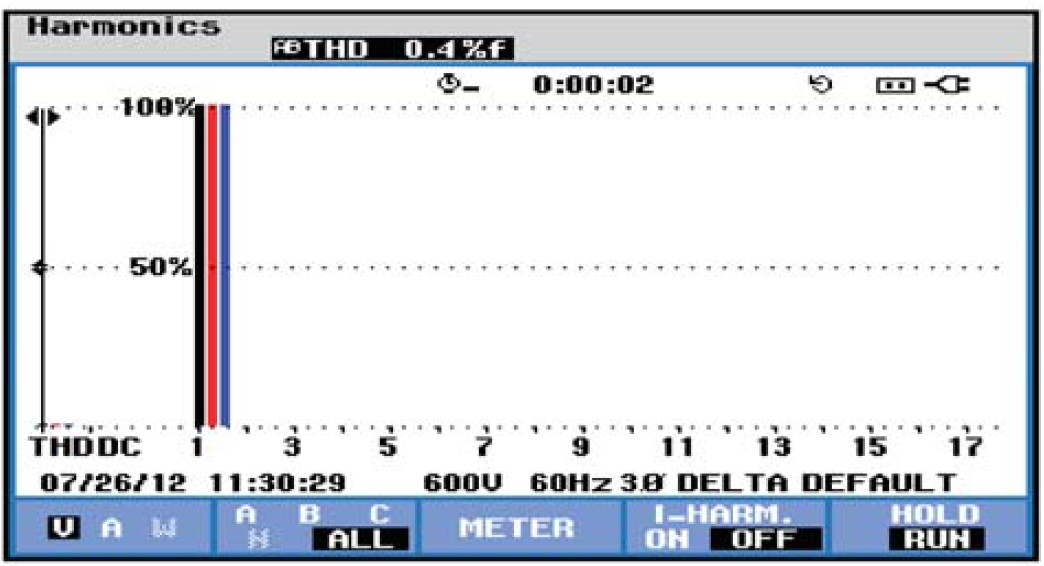
تين. 3ل. مضخة مياه مبردة مع Lineator AUHF — تشويه الجهد. ثدف = 0.4%. تم القياس تحت إمداد مولدات الديزل. مصدر: ميروس الدولية.[1]
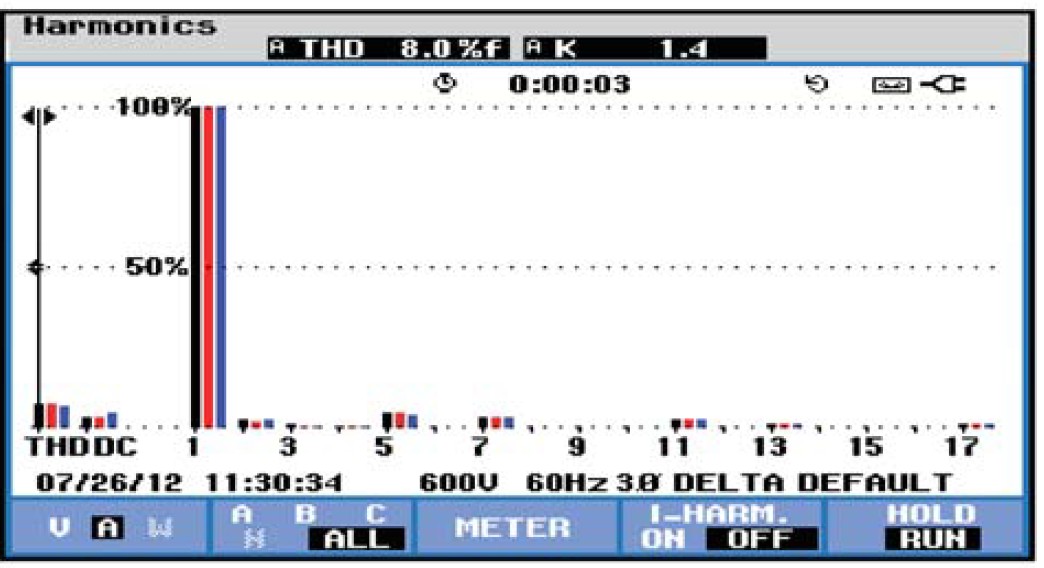
تين. 3ب. مضخة مياه مبردة مع Lineator AUHF — تشويه التيار. ثدي = 8.0%. IEEE 519 متوافق مع إمدادات المولدات في أسوأ الحالات. مصدر: ميروس الدولية.[1]
تم قياس التيار التفاعلي السعوي Lineator AUHF عند حمل خفيف عند أقل من 15% من التيار المقنن - ضمن نطاق التشغيل المقبول لمولدات الديزل في مركز البيانات. يعد هذا فحصًا مهمًا لتوافق المولد: يمكن أن تتسبب المرشحات السلبية ذات بنوك المكثفات الكبيرة في حدوث ظروف عامل طاقة رائدة تؤدي إلى زعزعة استقرار أنظمة AVR للمولدات. يتجنب المحتوى التفاعلي ذو السعة المنخفضة لجهاز Lineator هذه المشكلة, كما هو موضح أيضًا في دراسات الحالة التي تغذيها المولدات في وقت سابق من هذه السلسلة.
04 وجها لوجه: السلبي مقابل. نشط في نفس المنشأة
| المعلمة | مبرد - مرشح نشط (مدمج) | مضخات المياه المبردة — جهاز الخط السلبي AUHF |
|---|---|---|
| THDi - حمولة كاملة | > 12% | 8% |
| THDi - حمولة منخفضة | > 15% | 8% (ثابت) |
| THDv في المحطات الطرفية | غير محدد | 0.4% |
| ضوضاء عالية التردد | الحاضر - تحويل القطع الأثرية IGBT | لا شيء - لا توجد مكونات تبديل نشطة |
| IEEE 519 امتثال | ليس | نعم |
| توافق المولدات | غير معروف — خطر الضوضاء عالية التردد | مؤكد - <15% بالسعة رد الفعل في الحمل الخفيف |
| الأداء مقابل. حمولة | يتحلل عند الحمل الخفيف | متسقة عبر نطاق التحميل |
05 منظور جودة الطاقة: ما توضحه دراسة الحالة هذه
5.1 مراكز البيانات كبيئة حساسة لـ PQ
تقدم مراكز البيانات مزيجًا فريدًا من المصدر التوافقي والضحية التوافقية في نفس المنشأة. تعتبر VSDs لنظام التبريد مصادر توافقية. معدات تكنولوجيا المعلومات – الخوادم, تخزين, الشبكات - تحتوي على تبديل مصادر الطاقة التي هي في حد ذاتها أحمال غير خطية, ومصادر الطاقة هذه حساسة لجودة جهد الإمداد. يؤدي مركز البيانات ذو جودة الطاقة الداخلية الرديئة إلى الإضرار بالأحمال الحرجة الخاصة به.
في IEEE 519 تعمل حدود المعيار عند نقطة الاقتران المشترك على حماية شبكة المرافق والعملاء المجاورين. ضمن التوزيع الداخلي لمركز البيانات, القلق ذو الصلة هو ما إذا كان تشويه الجهد الناتج عن VSDs لنظام التبريد يؤثر على أداء وموثوقية معدات تكنولوجيا المعلومات. و 0.4% إن THDv الذي يتم تحقيقه باستخدام Lineator AUHF ضمن مصدر إمداد المولد لا يكاد يذكر - فهو لا يفرض أي ضغط قابل للقياس على مصادر الطاقة لمعدات تكنولوجيا المعلومات النهائية.
5.2 أوضاع فشل المرشح النشط – تقييم التكنولوجيا
يتم تسويق المرشحات التوافقية النشطة على أساس القدرة على التكيف، فهي تستجيب للمحتوى التوافقي المتغير في الوقت الفعلي, على عكس المرشحات السلبية المضبوطة لأوامر توافقية محددة. تعتبر هذه القدرة على التكيف حقيقية وقيمة حقًا في بعض التطبيقات: الأنظمة التي يتغير فيها الطيف التوافقي بشكل غير متوقع, أو حيث تشترك العديد من أنواع الأحمال المختلفة في ناقل مشترك. لكن, تشير دراسات الحالة التي أجراها مركز بيانات سان أنطونيو وباري معًا إلى ذلك على وجه التحديد, تطبيقات VSD تتميز بشكل جيد, يطابق المرشح السلبي المصمم جيدًا البدائل النشطة باستمرار أو يتفوق عليها بتكلفة أقل وبدون أي آثار جانبية لضوضاء تبديل IGBT.
يعد تدهور أداء الحمل الخفيف الذي لوحظ في المرشح النشط ذا أهمية خاصة لتطبيقات تبريد مراكز البيانات, حيث تتبع أحمال التبريد ملف تعريف أحمال تكنولوجيا المعلومات وتقضي وقتًا كبيرًا عند التحميل الجزئي. إن المرشح الذي يعمل بشكل أسوأ على وجه التحديد عندما يتم تشغيل النظام محملاً بشكل خفيف يكون مطابقًا بشكل سيئ لدورة عمل هذا التطبيق.
5.3 العرض الاحتياطي للمولد كاختبار الإجهاد التوافقي
إن قرار إجراء الاختبار في ظل الإمداد الاحتياطي لمولدات الديزل - بدلاً من إمداد المرافق - هو قرار صحيح من الناحية المنهجية وجدير بالملاحظة. تم تصميم مراكز البيانات للتشغيل المستمر خلال انقطاع المرافق. خلال فترة التشغيل التي تعمل بالمولد, البيئة التوافقية أسوأ من المعتاد. إذا تم التحقق من التخفيف التوافقي فقط على إمدادات المرافق, ليس هناك ما يضمن أن النظام سيظل ضمن الامتثال خلال فترة تشغيل المولد - بالضبط عندما تكون الموثوقية أكثر أهمية.
دراسة الحالة هذه - وهي الأخيرة في سلسلة Mirus International المقدمة على IPQDF - تجعل المجموعة دائرة كاملة. افتتحت السلسلة بتطبيقات حقول النفط التي تغذيها المولدات حيث تسببت المشاكل التوافقية في فشل المعدات عن بعد, المنشآت غير المأهولة. وينتهي الأمر بتقييم مركز البيانات الذي تم اختباره بواسطة المولد في الطرف المقابل من طيف البنية التحتية - وهو أمر بالغ الأهمية للمهمة, في المناطق الحضرية, كثيفة تكنولوجيا المعلومات. الفيزياء التوافقية متطابقة في كلا البيئتين. وتختلف نتيجة الخطأ في الحجم, ليس في النوع.
المراجع
- [1] شركة ميروس الدولية, “دراسة حالة الخطي: مرشح التوافقي السلبي مقابل. عامل التصفية النشط في مركز البيانات,” دراسة حالة التطبيق, برامبتون, أونتاريو, كندا, 2012. متاح: mirusinternational.com
- [2] IEEE الأمراض المنقولة جنسيا 519-2022, “معيار IEEE للتحكم التوافقي في أنظمة الطاقة الكهربائية,” IEEE, نيويورك, NY, 2022.