
Хармонично ублажавање морских обавеза штеди програм за бродове на мору — Мирус Интернатионал
| Апликација | Брод за снабдевање и сервис на мору — ДЦ електрични погон |
| Погони | Четири 3,000 ХП ДЦ погонски погони + један 1,500 ХП увлачиви прамчани потисник ДЦ погон |
| Дистрибуција | 600 У / 480 В систем напајања пловила, више генератора |
| Радни режим | Динамичко позиционирање (ДП) — критично за безбедност, нулта толеранција на нестабилност |
| Предфилтер ТХДв | Све до 20.89% — премашио све стандарде, изазвало кварове на опреми |
| Хармонични филтер | Мирус МОС Линеатор Тип Т (Специфично за поморство и пучину) |
| Пост-филтер ТХДв | < 8% под свим радним условима — у складу са АБС-ом |
| Сертификационо тело | Амерички биро за транспорт (АБС) |
01 Оперативни контекст: Брод који није могао да иде на посао
Брод за снабдевање и услуге на мору опремљен ДЦ електричним погоном је купљен и надограђен како би проширио свој обим рада за индустрију нафте и гаса на мору. Надоградње су укључивале побољшане навигационе системе, даљински управљано возило повећаног капацитета (РОВ) опрема, и унапређени системи дизалица и лифтова. Намера је била јасна: способније пловило, више уговора који генеришу приход.[1]
Резултат је био супротан. Нова опрема се показала много осетљивијом на изобличење напона од оригиналних система. Током морских испитивања, прекорачени нивои хармонијског изобличења напона 20% док ради у динамичком позиционирању (ДП) режим — способност прецизног одржавања станице која је потребна оператерима на мору за рад у близини бушаћих платформи и производних платформи. Неуспеси су се низали: навигационих система, команде дизалице, и РОВ опрема сва искусила проблеме у раду и кварове компоненти. Пловило није могло да прође морска испитивања и није могло да прихвати оффсхоре уговоре.[1]
Пловило је било пре садашњег америчког Бироа за бродарство (АБС) хармонских смерница и настао је под старијим стандардом. Када је наведена надоградња, хармонична усклађеност није била услов за дизајн. Тек након кварова током пловних испитивања испитано је хармонично ублажавање као предуслов за пуштање пловила у употребу..[1]
02 Зашто постојеће ублажавање није успело
Посуда није била без хармонијског ублажавања - имала је постојећу шему која се састојала од трансформатора који померају фазу који раде паралелно са индукторима усклађеним са импедансом. Ово је псеудо више импулсни аранжман: фазним померањем снабдевања појединачним погонским групама, намера је да се хармонијске струје из различитих група пониште у заједничкој магистрали напајања.
Шема није успела да смањи изобличење напона на прихватљив ниво, а у ретроспективи ово је било предвидљиво. Стратегије псеудо више импулса са померањем фазе ослањају се на то да су хармонијске струје из појединачних погонских група једнаке по величини и супротне по фази у тачки поништавања. Ово функционише прилично добро за АСД типа ПВМ са доследним хармонијским потписима. Не ради за ДЦ драјвере засноване на тиристорима.[1]
Комбинација променљивог садржаја хармоника у пет ДЦ претварача који раде истовремено при различитим оптерећењима, плус комутационо зарезивање, произвео тхе 20%+ ТХДв измерен током испитивања на мору. Постојеће ублажавање није било само премало – то је била погрешна технологија за апликацију.
03 ДЦ драјвери и комутационо урезивање: Механизам иза неуспеха
3.1 Како комутација тиристора ствара зарезе напона
Тиристорски ДЦ претварач исправља наизменични напон напајања да би произвео контролисану ДЦ магистралу. У сваком комутационом догађају – када се проводљивост преноси са једног тиристора на други – постоји кратак период током којег су две фазе напајања наизменичном струјом ефективно кратко спојене кроз проводне тиристоре. Напон напајања на улазу погона пада на близу нуле током трајања угла преклапања комутације. Ово је зарез напона.[2]
Напонски зарези се шире у мрежу напајања и појављују се на свакој тачки заједничког спајања на истој магистрали. Њихова озбиљност зависи од импедансе извора - што је импеданса већа, што је зарез дубљи и шири. На систему за напајање пловила са релативно високом импедансом извора (генератори, а не комунална мрежа), зарези су озбиљни и утичу на сву прикључену опрему истовремено.
3.2 Зашто зарези узрокују кварове опреме
Напонски зарези су високофреквентни, сметње велике амплитуде. Дигитални системи управљања — навигациони рачунари, кран ПЛЦ контролери, РОВ погонска електроника — узорковање напона напајања за синхронизацију и време. Зарез напона у погрешном тренутку може се протумачити као прелазак нуле, изазивање временских грешака, лажни окидачи, или директне грешке. Ово је режим квара који је онемогућавао контролу дизалице и РОВ опрему на овом пловилу: не термичко оштећење од трајних хармоника, али поремећај система контроле због пролазног урезивања.[1]
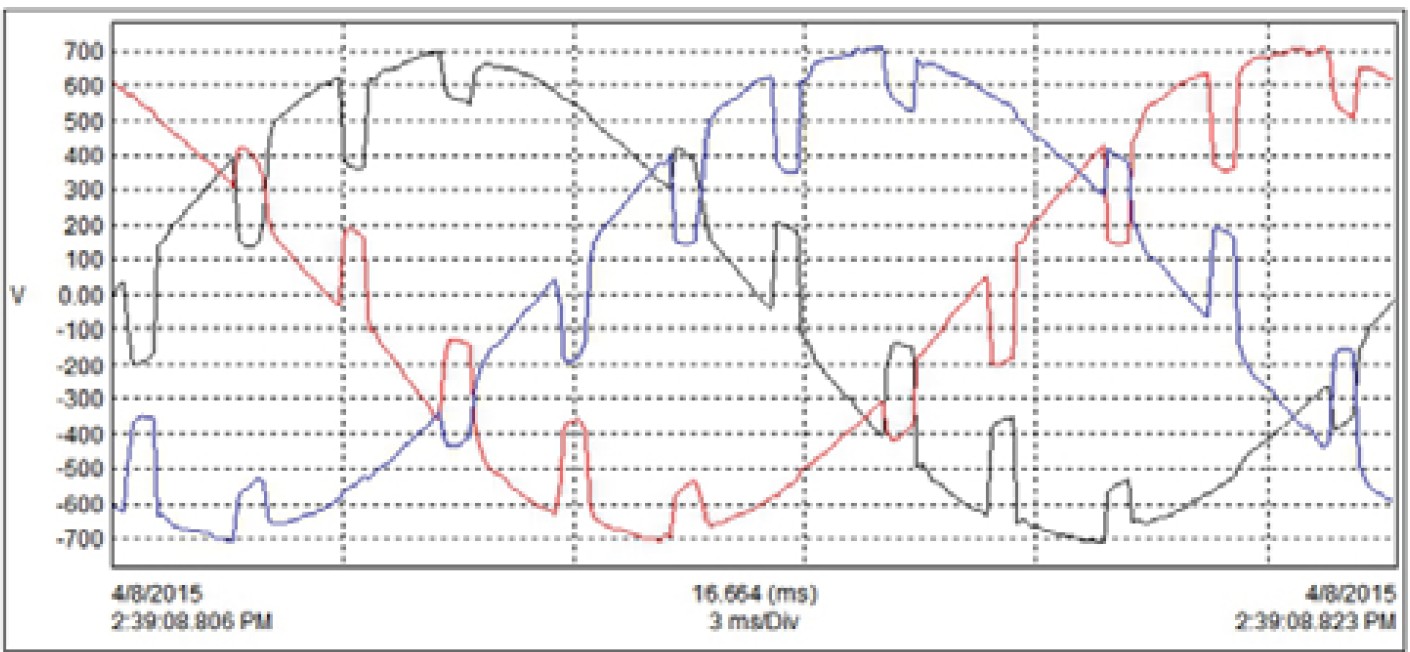
Смоква. 1. 480Таласни облик напона В магистрале у најгорим условима — два генератора, 100% брзина погона, бус-кравата отворена. ТХДв = 20.89%. Озбиљна дисторзија таласног облика и комутациони зарези су јасно видљиви. Извор: Мирус Интернатионал.[1]
3.3 Слика за симулацију — СОЛВ™ анализа
Пре него што се посветите стратегији ублажавања, Мирус и НСОЕМ су извршили комплетан преглед пловила у целом систему и користили Мирус’ власнички СОЛВ™ софтвер за симулацију хармоника за моделирање комплетног електричног система пловила — генератора, дистрибутивни трансформатори, ДЦ погони на различитим радним тачкама, и предложену конфигурацију филтера. Ток рада симулације имао је две фазе:[1]
- Пре-филтер основна линија — симулирани ТХДв на разводној табли са оригиналном опремом: 13% само на левој страни, у складу са мерењима на терену
- Предвиђање после филтера — симулирани ТХДв са МОС Линеаторима на сваком ДЦ драјву: 5.8% — добро унутар АБС-а 8% лимит
Блиско слагање између почетне симулације и услова предфилтра мереног на терену потврдило је софтверски модел. Ово је дало уверење да је резултат симулације после филтера био поуздан пре него што је било који хардвер наручен или инсталиран.
04 Решење: МОС Линеатор — Дизајн филтера за поморску употребу
4.1 Зашто филтер специфичан за море
Стандардни индустријски хармонијски филтери нису погодни за поморску примену. Окружење — вибрације, слани ваздух, влажност, циклирање температуре — захтева другачију конструкцију. Поморска класификацијска тела (АБС, ДНВ, Ллоид'с Регистер) намећу посебне захтеве за електричну опрему инсталирану на бродовима, укључујући хармонијске филтере.[3] Мирус МОС (Специфично за поморство и пучину) Линеатор је развијен да испуни ове захтеве уз одржавање перформанси ублажавања хармоника стандардног Линеатора АУХФ.[1]
4.2 Кључни критеријуми за избор филтера за ову апликацију
- Хармонска редукција широког спектра — мора умањити пуну, променљиви хармонијски спектар тиристорских једносмерних погона у свим радним тачкама, не само спектар тачака пројектовања
- Ублажавање комутационог зареза — индуктивност филтера пригушује озбиљност зареза ограничавањем брзине промене струје током комутационог преклапања
- Сигурносно искључивање АБС кондензаторске банке — по новим АБС стандардима, филтер мора аутоматски искључити кондензаторску банку ако дође до квара кондензатора док одржава рад хармоничког филтера. МОС Линеатор ово укључује као стандардну функцију
- Редундантни надзор безбедности — заштитни надзор у раној фази са редундантним упозорењима, прикладно за сигурносно критично ДП пловило
- Компактна ретрофит коверта — Продори у труп и палубу за накнадну уградњу су минимизирани компактним склопом филтера
4.3 Стратегија распоређивања — постепена инсталација током сезоне урагана
Тестирање на мору и постављање филтера одржано је током сезоне урагана у Мексичком заливу. Ово је наметнуло необично ограничење: брод је морао да задржи погонску способност у сваком тренутку у случају да олуја захтева поновно позиционирање. Филтери су стога повезани један по један сет — инсталирајте, тест, провери АБС усклађеност и оперативну компатибилност, затим пређите на следећи сет. Тек када је свака фаза потврђена, тим је кренуо напред.[1]
МОС Линеатор Типе Т јединице су инсталиране на линијској страни сваке од четири 3,000 ХП погонски једносмерни погони и 1,500 ХП увлачиви прамчани потисник ДЦ погон — укупно пет филтера. Постојећи псеудо фазни трансформатор и индукторска опрема су уклоњени.
05 Резултати: Усклађеност са АБС-ом у свим радним условима
5.1 Изобличење напона — у најгорем случају за усаглашеност
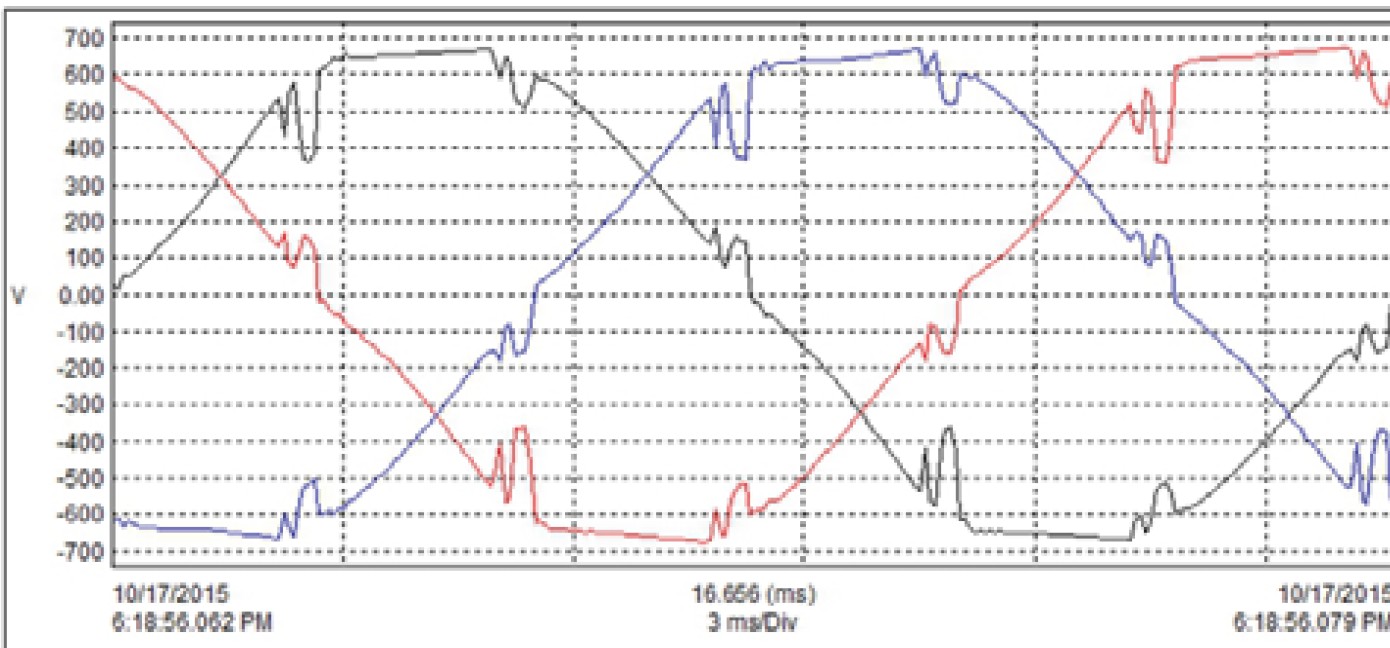
Смоква. 2. 480В бус таласни облик напона у најгорем случају операције динамичког позиционирања након инсталације МОС Линеатора. ТХДв = 7.8% — у оквиру АБС-а 8% лимит. Упоредите са 20.89% стање предфилтра на сл. 1. Извор: Мирус Интернатионал.[1]
480В сабирница ТХДв је пала са 20.89% (предфилтер у најгорем случају, два генератора, 100% брзина, бус-кравата отворена) до 7.8% у еквивалентном најгорем случају сценарија динамичког позиционирања пост-филтер — испод АБС-а 8% лимит. У свим тестираним условима рада, ТХДв је остао испод 8%.[1]
5.2 Подаци о испитивању прамчаног потисника — профил променљивог оптерећења
The 1,500 ХП увлачиви прамчани потисник је тестиран у свом пуном опсегу брзина са сва четири генератора на линији. Резултати показују ефикасност филтера у широком опсегу оптерећења:[1]
| Референца брзине | Генератори | Аутобусна кравата | ТХДв | ТХДи | Напон |
|---|---|---|---|---|---|
| 25% | 4 | Затворено | 0.54 - 0.62% | 26 - 30.7% | 603 У |
| 50% | 4 | Затворено | 0.7 - 0.9% | 13.83 - 13.93% | 602 У |
| 75% | 4 | Затворено | 1.23 - 1.3% | 7.4 - 7.52% | 600 У |
| 100% | 4 | Затворено | 0.9 - 0.97% | 5.6 - 5.65% | 599 У |
Обратите пажњу на повишени ТХДи на 25% брзина (26–30,7%). Ово је карактеристично за тиристорске једносмерне погоне при малим угловима паљења — тренутни таласни облик је више изобличен при малом оптерећењу. Упркос овоме, изобличење напона остаје испод 1% у овој радној тачки јер је апсолутна величина хармонијских струја мала на 25% оптерећење. Ово илуструје важну разлику: ТХДи и ТХДв нису заменљиве метрике — висок ТХДи при малом оптерећењу не значи нужно висок ТХДв.
5.3 Резултати теста динамичког позиционирања у најгорем случају
| Радни услови | Генератори | ТХДв | Напон | Напомене |
|---|---|---|---|---|
| Ауто ДП — сви потисници | Све | 2.63 - 2.84% | 479 У | Променљиво оптерећење |
| Статички супротни ДП — сви потисници 100% | Све | 7.76 - 7.85% | 471 У | Максимални хармонијски напон |
| Пуна брзина напред — лево и десно 100% | Све | 6.50 - 6.62% | 473 - 478 У | Нема ДДТ или ТТ |
У најгорем случају — статички супротни ДП са свим потисницима на 100% — произведено 7,76–7,85% ТХДв. Ово је најтежи могући сценарио хармонијског оптерећења на овом пловилу: сви погони истовремено при пуном оптерећењу, гурајући се један против другог да задрже позицију против ветра и струје. Чак и под овим условом, систем је остао унутар АБС-а 8% лимит.[1]
06 Перспектива квалитета електричне енергије: Шта ова студија случаја илуструје
6.1 Комутационо зарезивање — недовољно цењени хармонички проблем
Већина дискусија о индустријским хармоницима фокусира се на тренутни ТХДи и напон ТХДв мерено анализатором снаге у стационарном стању. Комутационо зарезивање је друга категорија поремећаја — то је пролазни процес у временском домену који се дешава предвидљивом брзином (шест пута по циклусу за 6-пулсни тиристорски мост) али са карактеристикама које мерење ТХД у стабилном стању не обухвата у потпуности. Дубина зареза, ширина, и површина су релевантни параметри за процену компатибилности опреме, а то су функције импедансе извора и угла покретања погона - не само величине погона.[2]
ИЕЕЕ 519 адресе урезивање у својој табели 10.3 ограничења дубине зареза и површине зареза. АБС има аналогне одредбе за поморску примену. У оба случаја, ограничења постоје изричито зато што је контролна електроника подложна грешкама времена изазваним зарезом - управо начин квара који је примећен на овом пловилу.
6.2 ТХДи вс. ТХДв — аномалија малог оптерећења
Подаци о тестирању прамчаног потисника чине ствар коју вреди нагласити: у 25% брзина, ТХДи је био 26–30% док је ТХДв био испод 1%. У 100% брзина, ТХДи је пао на 5,6–5,65% док је ТХДв био 0,9–0,97%. Оба показатеља су побољшана са оптерећењем, али ТХДи је почео далеко више. Ово није парадокс – то је последица тога како се ТХД дефинише као проценат фундаменталног.
При малом оптерећењу, основна струја је мала. Хармоничне струје, док мали у апсолутном износу, представљају велики део малог фундаменталног - производе високе ТХДи. Исте мале апсолутне хармонијске струје теку кроз импедансу извора и производе малу апсолутну дисторзију напона - отуда низак ТХДв. Практична лекција: процена утицаја хармоника на мрежу захтева посматрање ТХДв и апсолутних хармонијских струјних величина, не само ТХДи.
6.3 Симулација пре инсталације — прави редослед
Ова студија случаја, попут случаја цевовода Плаинс Алл-Америцан, показује вредност симулације хармоника пре набавке филтера. Тхе СОЛВ™ модел предвиђен 5.8% ТХДв пост-филтер на колу на страни порта; резултат мерења на терену био је 7.8% у најгорем случају ДП сценарија пуног брода — разуман договор с обзиром на додатна оптерећења потисника која нису присутна у симулацији само на страни луке. Симулација је дала довољно самопоуздања да се одреди тачан тип и величина филтера, избегавање скупог приступа методом покушаја и грешке на радном пловилу.
6.4 Веза са серијом ИПКДФ
Претходне две студије случаја у овој серији (ЕСП синусни филтер, Плаинс Алл-Америцан гасовод) бавио се 6-импулсним ПВМ погонима и тиристорским једносмерним претварачима, како у копненим острвским системима. Ова студија случаја проширује слику на поморске апликације и уводи комутационо зарезивање као механизам квара који се разликује од трајног хармонијског грејања. Заједно, ове три студије случаја покривају главне категорије хармонијских проблема са којима се сусрећу у индустријским и поморским инсталацијама које се напајају генератором.
Технички чланци у овој серији (Чланови 1–3) баве се истим хармонијским појавама са теоријске стране — струјним спектрима, мрежна интеракција, моторичке ефекте. Студије случаја показују шта се дешава када се те појаве не ублажавају у стварним системима. Јаз између теорије и последица се обично мери у неисправној опреми и изгубљеном приходу.
Референце
- [1] Мирус Интернатионал Инц., “Студија случаја МОС Линеатор: Ублажавање хармоника у поморству штеди програм Оффсхоре Сервице Вессел,” Студија случаја апликације, Брамптон, Онтарио, Канада, 2016. Доступан: мирусинтернатионал.цом/мослинеатор
- [2] ИЕЕЕ Стд 519-2022, “ИЕЕЕ стандард за хармонијску контролу у електроенергетским системима,” ИЕЕЕ, Њујорк, НИ, 2022. (Одељак о зарезивању напона, Табела 10.3.)
- [3] Амерички биро за транспорт (АБС), “Смернице за контролу хармоника у електроенергетским системима,” АБС, Хјустон, ТКС.