
Oberschwingungsminderung für ein von einem Generator gespeistes Motorkontrollzentrum: Erdgas-Süßungsanlage – Mirus International
| Lage | Britisch-Kolumbien, Kanada |
| Anwendung | Erdgassüßungsanlage – Kühlventilatoren für den Aminprozess |
| Kundencenter | 8 Motorkontrollzentren, jeweils ausschließlich mit VSDs beladen |
| Antriebsmischung pro MCC | 7 Antriebe: 1×40 PS, 4×50 PS, 2×60 PS (480 IN) |
| Gesamtzahl der Laufwerke | 56 Frequenzumrichter quer 8 Kundencenter |
| Liefern | Vor-Ort-Turbinengeneratoren – vollständig inselförmig, kein Versorgungsanschluss |
| Harmonischer Filter | Mirus Lineator AUHF – einer pro MCC |
| Vorfilter THDv (vorhergesagt) | > 16.5% — THDi bis zu 40% |
| Nachfilter (gemessen) | THDv 1.9% — THDi 5.7% bei nahezu Volllast |
01 Betriebskontext: Sauergasverarbeitung und warum die Stromqualität sicherheitskritisch ist
Ein Erdgasverarbeitungs- und -transportunternehmen in British Columbia betreibt eine Erdgassüßungsanlage – eine Anlage, die giftigen Schwefelwasserstoff entfernt (H₂S) aus Sauergas, bevor es sicher in Pipelines transportiert werden kann. Der Entfernungsprozess verwendet eine wässrige Aminlösung, die H₂S aus dem Gasstrom absorbiert. Die Aminflüssigkeit muss während des gesamten Prozesses auf einer sorgfältig kontrollierten Temperatur gehalten werden: zu warm und die Absorptionseffizienz sinkt; zu kühl und der Prozess stagniert.[1]
Die Temperaturregelung erfolgt durch Kühlventilatoren, die von Frequenzumrichtern angetrieben werden (AFDs). Jeder der acht Prozessstränge – sogenannte Aminstränge – verfügt über ein eigenes Motor Control Center mit sieben 480 V-Antriebe: eins 40 HP, vier 50 HP, und zwei 60 HP-Einheiten. Alle acht MCCs werden von Turbinengeneratoren vor Ort versorgt. Es besteht kein Anschluss an das öffentliche Stromnetz.
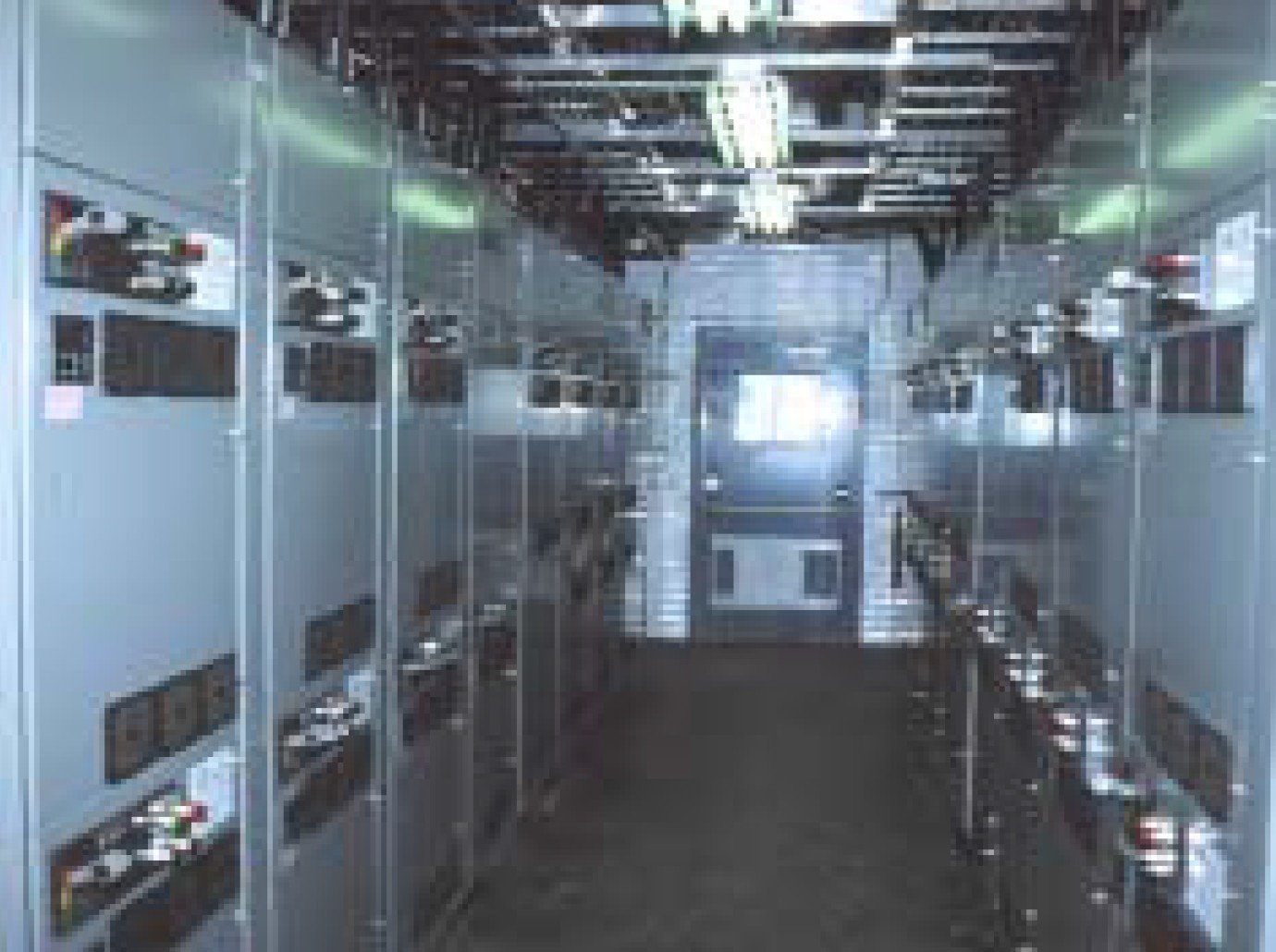
Abb.. 1. Installation des Motor Control Centers in der Erdgassüßungsanlage, Britisch-Kolumbien. Acht MCCs, jeweils ausschließlich mit sieben Frequenzumrichtern ausgestattet. Quelle: Mirus International.[1]
02 Das vom Generator gespeiste MCC-Problem: Warum Standardlösungen ausgeschlossen wurden
2.1 Das harmonische Ladebild
Acht MCCs, jeweils mit sieben 6-Puls-VSD-Lasten, an einen gemeinsamen Turbinengeneratorbus angeschlossen. Ohne harmonische Abschwächung, die vorhergesagte Gesamtharmonische Spannungsverzerrung auf der 480 V-Schaltanlage, die die MCCs versorgt, wurde überschritten 16.5%, mit Stromverzerrung so hoch wie 40%.[1] Dabei handelt es sich nicht um grenzwertige Zahlen, sondern um ein System, das vom ersten Betriebstag an einer starken harmonischen Belastung ausgesetzt wäre.
Die Ursache des Problems ist aus früheren Fallstudien dieser Serie bekannt: Turbinengeneratoren haben im Vergleich zu einem Versorgungsnetz eine hohe Quellenimpedanz. Dieselben harmonischen Ströme, die auf einem Versorgungsbus einen bescheidenen THDv erzeugen würden, erzeugen auf einem Generatorbus einen deutlich höheren THDv. Mit 56 treibt alle Oberschwingungsströme durch die gleiche Generatorquellenimpedanz an, Es wurde vorhergesagt, dass die kumulative Wirkung schwerwiegend sein würde.
2.2 Warum jede konventionelle Lösung abgelehnt wurde
Der Projektingenieur, Dave Challoner, Die verfügbaren Abhilfemaßnahmen wurden systematisch evaluiert und festgestellt, dass jede für diese spezielle Anwendung ungeeignet ist:[1]
- Netzdrosseln — Unzureichende harmonische Dämpfung für eine Generatorquelle mit hoher Impedanz. Eine Netzdrossel reduziert den Oberschwingungsstrom durch Hinzufügen einer Reihenimpedanz, Bei einem vom Generator gespeisten System ist die Quellenimpedanz jedoch bereits hoch, und die zusätzliche Drosselimpedanz verursacht einen inakzeptablen Spannungsabfall an den Antriebsklemmen, ohne dass eine sinnvolle THDv-Reduzierung auf Busebene erreicht wird.
- 12- und 18-Puls-Lösungen – würde einen Phasenschiebertransformator pro Antrieb oder pro MCC erfordern. Mit 56 kleine Laufwerke reichen von 40 zu 60 HP, die Kosten für 56 oder 8 Phasenschiebertransformatoren machten diese Option wirtschaftlich unpraktisch. Mehrpulslösungen lassen sich schlecht auf Installationen mit vielen kleinen Antrieben skalieren.
- Abgestimmte passive Filter — erfordern Kenntnisse über die gesamte harmonische Umgebung am Einsatzort. Der harmonische Beitrag des übrigen vom Generator gespeisten Stromsystems war schwer zu charakterisieren, Dies macht eine genaue Größenbestimmung unmöglich. Ein falsch abgestimmter Filter in einem vom Generator gespeisten System kann Resonanzen erzeugen, die bestimmte harmonische Ordnungen verstärken, anstatt sie zu dämpfen.
- Aktive Filter — Unsicherheit über die langfristige Zuverlässigkeit der leistungselektronischen Aktivfiltertechnologie im Dauerbetrieb, sicherheitskritische Prozessumgebung. Aktive Filter erfordern mehr Wartung als passive Lösungen und ihre Fehlermodi können störender sein.
03 Filterauswahl: Ein Lineator pro MCC
3.1 Warum der Lineator AUHF gewählt wurde
Der Lineator AUHF (Fortschrittlicher universeller harmonischer Filter) wurde auf Empfehlung des VSD-Lieferanten ausgewählt, und bestätigt von Dave Challoner basierend auf drei spezifischen Attributen, die für diese Anwendung erforderlich sind:[1]
- Erstklassige harmonische Dämpfung — Breitbandreduzierung des gesamten harmonischen Profils, das von 6-Puls-Antrieben erzeugt wird, nicht nur bestimmte harmonische Ordnungen
- Zuverlässiges passives Design — keine aktive Leistungselektronik, kein Kontrollsystem, keine Software. In einer sicherheitskritischen Prozessumgebung im Dauerbetrieb, Die Einfachheit passiver Filter führt direkt zu Zuverlässigkeit und geringem Wartungsaufwand
- Systemunabhängigkeit — Der Filter arbeitet gemäß der Spezifikation, unabhängig vom Oberschwingungsgehalt anderer Lasten auf dem Generatorbus, ohne dass detaillierte Kenntnisse der äußeren harmonischen Umgebung erforderlich sind
3.2 Die Anwendungsstrategie auf MCC-Ebene
Anstatt einen Filter pro Laufwerk anzuwenden – was erforderlich gewesen wäre 56 Einheiten – ein einzelner Lineator wurde auf jede MCC-Aufstellung angewendet, Alle sieben Laufwerke in diesem MCC werden gleichzeitig gefiltert. Dieser Ansatz funktioniert, weil die Größe des Lineators auf die Gesamtlast des MCC abgestimmt ist, nicht auf einzelne Laufwerke. Das Ergebnis waren acht Filter statt 56, mit erheblichen Kosteneinsparungen, Installationskomplexität, und Panelraum.[1]
04 Ergebnisse: Leistung, die die Prognosen übertraf
Messungen nach der Installation bei nahezu Volllast bestätigten, dass der Lineator AUHF sowohl das Projektziel als auch das IEEE übertraf 519 Richtwerte:[1]
Das THDv-Ergebnis von 1.9% Besonders bemerkenswert ist, dass es weniger als die Hälfte beträgt 5% Projektziel und liegt deutlich unter dem IEEE 519 Grenzwert, der für dieses System gilt.[2] Ein THDv unten 2% auf einem generatorgespeisten System mit 56 VSD-Lasten stehen für eine hervorragende Filterleistung. Der THDi von 5.7% ebenfalls überschritten 8% Ziel.
05 Die Power-Quality-Perspektive: Was diese Fallstudie veranschaulicht
5.1 Die Filterauswahlmethode – Eliminierung nach Anwendungsanforderungen
Diese Fallstudie ist ein gutes Beispiel für die Auswahl von Filtertechnologien durch systematische Eliminierung auf der Grundlage anwendungsspezifischer Einschränkungen. Die Einschränkungen waren: Generatorversorgung (Netzdrosseln werden als unzureichend und abgestimmte Filter als zu riskant ausgeschlossen), viele kleine Laufwerke (Multipuls als zu kostspielig auszuschließen), sicherheitskritischer Dauerbetrieb (aktive Filter als nicht hinreichend nachgewiesen auszuschließen). Der Eliminierungsprozess führte direkt zum Breitband-Passivfilter – der einzigen Technologie, die alle Einschränkungen gleichzeitig erfüllte.
Diese Methode: Definieren Sie zuerst die Einschränkungen, „Matching Technology Second“ – ist zuverlässiger, als mit einer bevorzugten Lösung zu beginnen und Gründe für deren Anwendung zu finden. Es führt auch zu einer besseren Dokumentation der technischen Überlegungen, Dies ist relevant, wenn es um die Rechtfertigung von Investitionsausgaben gegenüber dem Projektmanagement geht.
5.2 MCC-Ebene vs. Filterung auf Laufwerksebene – wann immer es angebracht ist
Die Entscheidung, auf MCC-Ebene und nicht pro Antrieb zu filtern, gilt, wenn die MCC-Last überwiegend oder ausschließlich aus VSD-Lasten besteht. In diesem Fall, Alle sieben Antriebe pro MCC waren Frequenzumrichter – 100% nichtlineare Belastung. Unter diesen Bedingungen, Die Filterung auf MCC-Ebene ist sowohl effektiv als auch wirtschaftlich.
Die Berechnung ändert sich, wenn ein MCC eine Mischung aus VSD und linearen Lasten enthält (Direktanlaufmotoren, Widerstandsheizungen, Transformatoren). Dann, Die linearen Lasten erzeugen keine Oberschwingungen, verbrauchen jedoch Blindleistung, Dadurch verändert sich die vom Filter wahrgenommene effektive Belastung. Ein Filter, der für die gesamte MCC-Last einschließlich linearer Lasten dimensioniert ist, kann für die harmonische Quelle überdimensioniert sein. Dann ist eine Filterung pro Laufwerk oder eine sorgfältige Aggregatdimensionierung unter Berücksichtigung des Lastmixes erforderlich. Die Anwendung der Erdgassüßungsanlage vermied diese Komplexität, indem sie MCC-Lasten spezifizierte 100% Antriebe – eine glückliche Abstimmung von Prozessanforderungen und Energiequalitätstechnik.
5.3 Das vom Generator gespeiste Muster – ein wiederkehrendes Thema
Dies ist die dritte Fallstudie in Folge in dieser Reihe, bei der es um ein von einem Generator gespeistes Inselsystem geht: die Plains All-American-Pipelinestation (Dieselgenerator, einzelner VSD), das Offshore-Serviceschiff (mehrere Generatoren, Gleichstromantriebe), und jetzt eine Turbinengenerator-gespeiste Anlage mit 56 fährt rüber 8 Kundencenter. Das Muster ist konsistent: Oberschwingungsprobleme, die in einem Versorgungsnetz beherrschbar wären, werden in einem von einem Generator gespeisten System kritisch, und die Lösung erfordert in jedem Fall eine Filtertechnologie, die der hohen Quellenimpedanz und dem Instabilitätsrisiko des Generatorspannungsreglers Rechnung trägt.
Der nächste technische Artikel dieser Reihe wird den 6-Puls-Gleichrichter aus der entgegengesetzten Richtung untersuchen – nicht als harmonische Quelle, die das Netzwerk verschmutzt, aber als Opfer einer schlechten Versorgungsspannungsqualität. Das Verständnis, wie netzwerkseitige PQ-Probleme die Laufwerksleistung beeinträchtigen, vervollständigt das Bild der bidirektionalen Beziehung zwischen Laufwerken und ihrer Stromversorgung.
Referenzen
- [1] Mirus International Inc., “Case Study: Erdgas-Süßungsanlage,” Anwendungsfallstudie, Mississauga, Ontario, Kanada. Verfügbar: mirusinternational.com
- [2] IEEE Std 519-2022, “IEEE-Standard für harmonische Kontrolle in elektrischen Energiesystemen,” IEEE, New York, NY, 2022.