
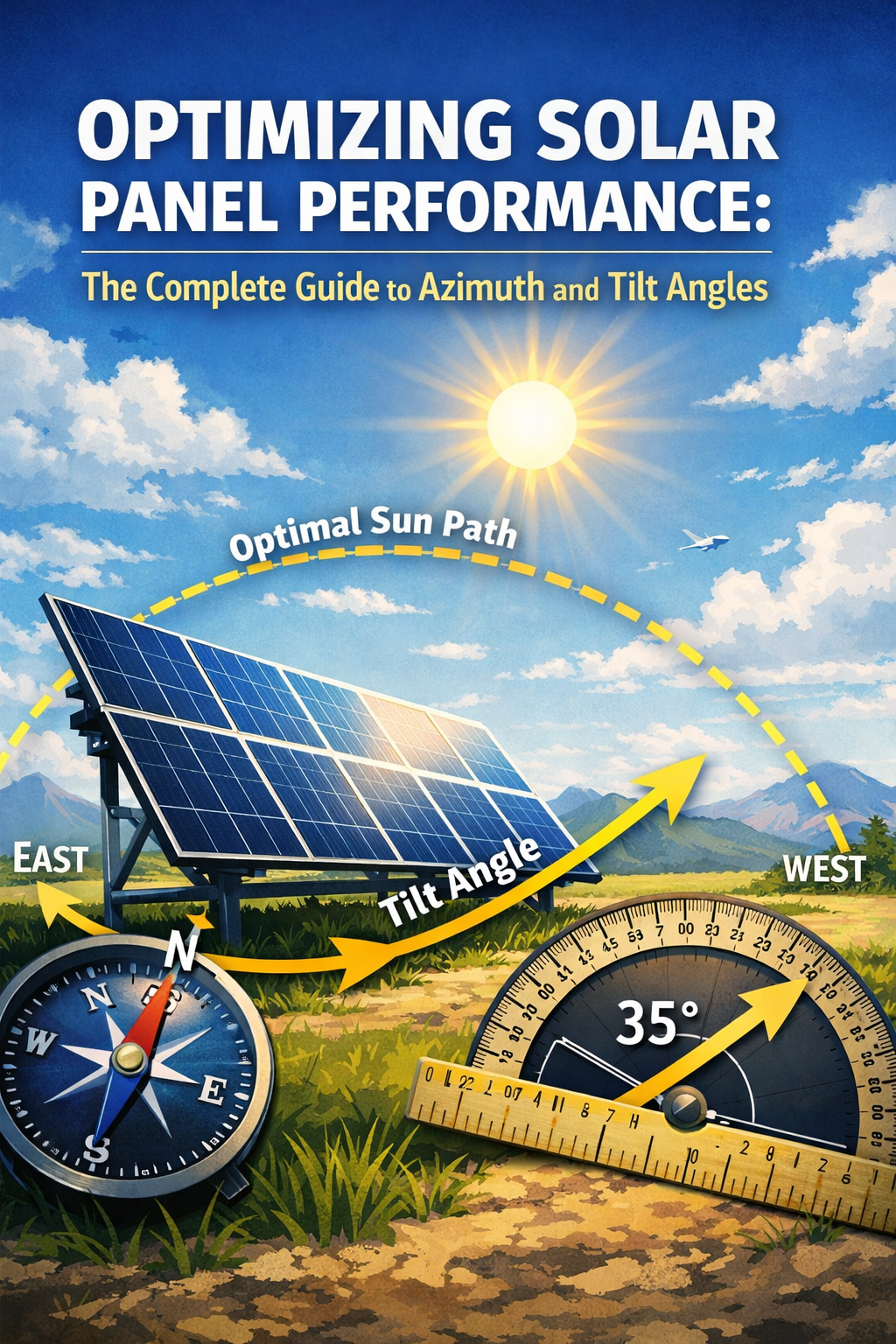
最大限度地提高太阳能电池板系统的能量输出, 必须优化两个临界角: “方位角 (面板面向的罗盘方向) 和倾斜 (与水平面的垂直角). 理想的配置主要由地理纬度决定, 但它也受到能源消费模式的影响, 屋顶限制, 和当地的环境条件 [1].
1. 基本规则: 方位角 (方向)
方位角决定了白天面板接收最多阳光的时间.
- 北半球: 黄金法则是将面板朝向真南. 当太阳在天空的南部划过弧线时,这个方向捕捉到最多的阳光 [2]. 例如, 新泽西州的一项优化系统的研究发现理想的方位角为 176°, 几乎在正南 [3].
- 南半球: 规则被颠倒了; 面板应面向真北 指向赤道 [2].
重要说明 “正南”: 必须将面板朝向真的 (地理的) 南, 不是磁 指南针读数为南. 区别, 称为磁偏角, 可能很重要,并且因位置而异 [4].
理论上,正南是年总产量最大的最佳位置, 有很大的灵活性:
- 弹性窗口: 偏差达15正南方以东或以西°–20° 每年的能量损失仅为约1% [5].
- 东西方表演: 即使是正东或正西朝向的屋顶仍然可行, 通常只生产10–23% 减少 每年的能源消耗量高于朝南的系统, 取决于纬度 [6].
2. 基金会: 倾斜 (倾角)
倾斜角度根据太阳在天空中的高度优化能量捕获, 随季节变化.
- 固定倾斜的纬度规则: 对于固定安装 (没有季节性调整), 行业标准的最佳实践是将倾斜角度设置为等于您的纬度 [2]. 这提供了全年平均最佳的能源产量. 对于固定系统建议的更精确的近似公式是: 最佳倾斜度 ≈ 纬度 × 0.76 + 3.1° [3].
量化收益: 倾斜的影响
使用 NREL SAM 软件进行的模拟研究数据清楚地表明了优化倾斜的重要性. 下表说明了年发电量 3.4 美国两个不同的 kW 系统. 城市, 证明在与其各自纬度密切相关的倾斜角度处可实现最佳性能 [7].
| 倾斜角度 | 凤凰, 这 (33°N) | 波特兰, 或者 (45°N) |
|---|---|---|
| 0° (平坦的) | 5,723 kWh (基线) | 3,624 kWh (基线) |
| 20° | 6,461 kWh (+13%) | 4,239 kWh (+15%) |
| 30° | 6,575 kWh (+15%) | 4,355 kWh (+18%) |
| 40° | 6,526 kWh (+14%) | 4,368 kWh (+18%) |
| 90° (垂直的) | 3,966 kWh (-31%) | 2,967 kWh (-20%) |
- 季节性调整: 对于那些愿意每年调整面板两次的人, 性能可以微调. 一个常见的策略是将倾斜度设置为夏季纬度负10°至15° (当太阳很高的时候) 和冬季纬度加10°至15° (当太阳很低时). 这可以产生约4–5% 年能源产量 [3].
3. 结合方位角和倾斜角以实现特定目标
虽然 “纬度倾斜” 和 “真南方位角” 规则最大化年总产量, 最佳配置可以根据您的具体能源需求而变化.
- 最大限度地节省财务费用: 如果您的公用事业公司有使用时间 (也) 下午晚些时候电价较贵, 稍微调整面板方向可能会更有利可图南以西. 这会将生产转移到当天晚些时候, 即使总能源输出略有下降,也能抵消更昂贵的电网电力. 研究表明,纯粹的能源优化方向和收入优化方向之间的财务节省最大差异可达3.12% [8].
- 匹配消费模式:
- 东南 (135°): 最适合早晨能源消耗高的家庭 [9].
- 西南 (225°): 非常适合午后空调使用较多或低于分时费率的家庭 [9].
- 东/西分裂: 在平屋顶上, 将面板的一半向东放置,一半向西放置可以创造更广阔的空间, 全天更稳定的功率输出曲线, 这对于最大化自我消耗非常有用 [10].
汇总表: 按半球和球门推荐的角度
| 目标 | 半球 | 方位角 (方向) | 倾斜角度 | 关键考虑因素 |
|---|---|---|---|---|
| 最大化年产量 | 北方 | 正南 (180°) | ≈ 纬度 | 最佳整体投资回报率的标准 [2]. |
| 最大化年产量 | 南方 | 真北 (0°) | ≈ 纬度 | 最佳整体投资回报率的标准 [2]. |
| 最大化早晨的产出 | 北方 | 东南 (〜135°) | ≈ 纬度 | 适合早晨负载较高的家庭 [9]. |
| 最大化下午产出 | 北方 | 西南 (~225°) | ≈ 纬度 | 非常适合 TOU 费率和高峰空调使用情况 [9]. |
| 季节性优化 | 任何一个 | 南 (Ň. 下摆) / 北 (小号. 下摆) | 纬度±15° | 每年需要手动调整两次才能获得约 4% 的增益 [3]. |
| 非理想屋顶 | 任何一个 | 东方还是西方 | 现有屋顶坡度 | 可行的; 仅有的 10-23% 输出低于最佳输出 [6]. |
精密工具
虽然这些规则提供了很好的指导, 专业设计师使用先进软件进行最终优化. NREL 等工具光伏瓦数, 光伏地理信息系统, 和其他人使用特定地点的气象数据来模拟数千个角度组合的能源生产, 考虑当地的天气模式, 阴影, 和弄脏 [1].
由人工智能在成人监督下生成😉
参考文献
- 太阳能评论. (日期不详。). 最佳太阳能电池板角度: 如何找到倾斜角度. 检索自太阳能评论网站
- 太阳能网. (日期不详。). 太阳能电池板的最佳倾斜和方向. 检索自太阳能网站
- 能源圣人. (日期不详。). 太阳能电池板的最佳角度是多少?. 检索自energysage.com
- 国家海洋和大气管理局 (美国国家海洋和大气管理局). (日期不详。). 磁偏角. 检索自美国国家海洋和大气局网站
- 清洁能源评论. (日期不详。). 太阳能电池板方向. 检索自清洁能源评论.info
- 太阳电力. (日期不详。). 太阳能电池板方向. 检索自sunpower.maxeon.com
- 国家可再生能源实验室 (国家可再生能源实验室). (日期不详。). 系统顾问模型 (萨姆). 检索自国家关系网
- 研究之门. (2021). 优化光伏阵列方向以提高使用时间率. 检索自研究门网
- 格林塔布尔. (日期不详。). 太阳能电池板的最佳方向和角度. 检索自greentumble.com
- 太阳能世界在线. (日期不详。). 东西向太阳能电池板方向. 检索自太阳能世界在线网站
内容由人工智能辅助起草并由作者根据以下内容进行验证 30 多年电能质量领域经验.