
国際的な電力品質ディスカッション フォーラム (IPQDF) 技術リソース
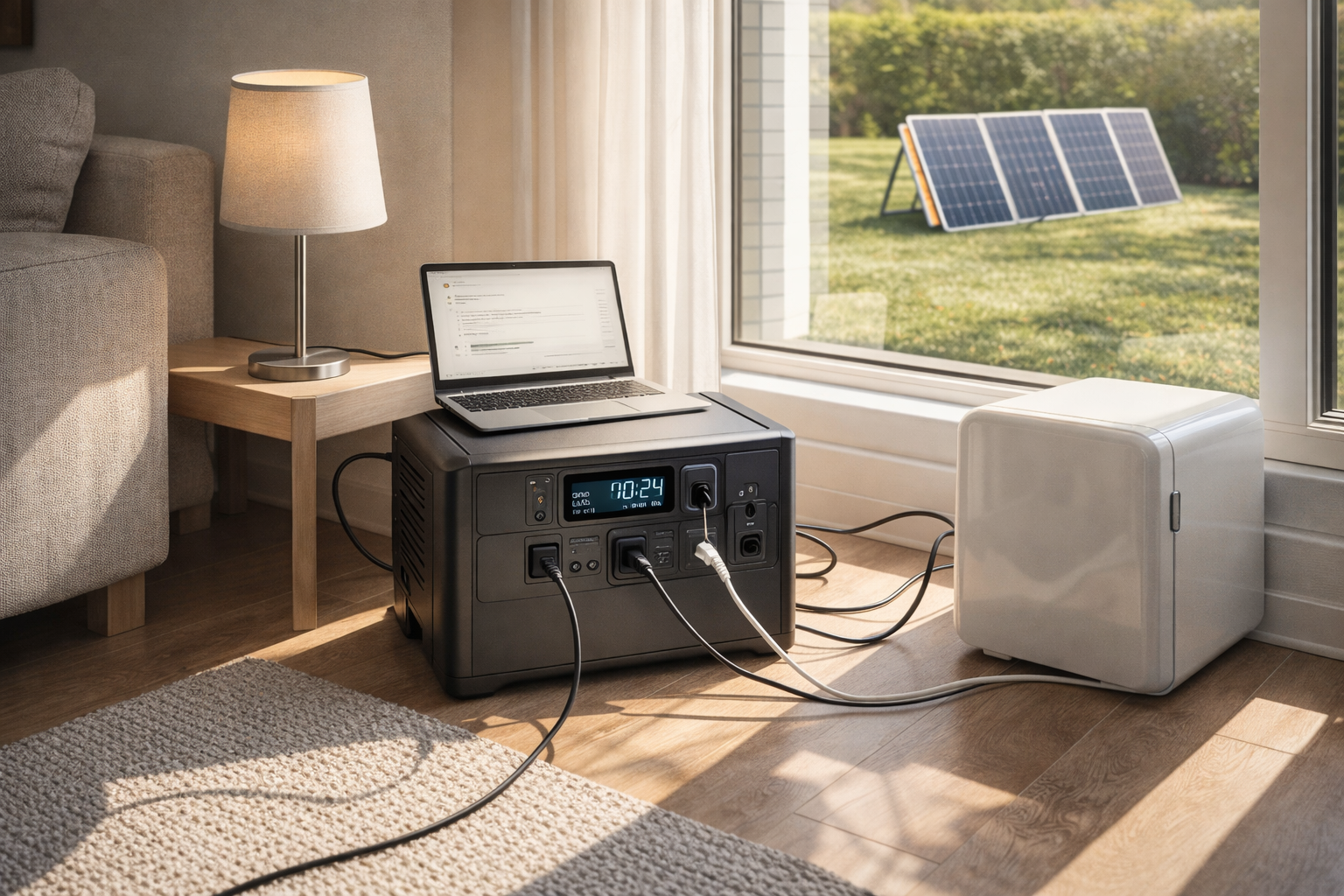
多くの住宅所有者にとって, 屋根にパネルを取り付けるというアイデア, 走行導管, 牽引許可, メインの電気パネルへの配線は恐ろしい場合があります. 入る,en家電型太陽光発電システム—としても知られています太陽光発電機, ポータブル発電所, またはオールインワンエネルギー貯蔵システム. これらのユニットにはバッテリーがバンドルされています, インバータ, チャージコントローラー, モニタリングを 1 つにまとめます, 家電製品を接続するか、転送スイッチを介して自宅に接続するだけの可動式エンクロージャ.
このセクションでは、これらのシステムを従来の DIY 設置と比較して説明します。, ニーズに最適なパスを決定するのに役立ちます.
家電型太陽光発電システムとは?
と考えてください。コンセント内蔵の巨大な充電式バッテリー. ソーラーパネルから充電します (地面またはポータブルラックに置く), グリッドから, あるいは車からでも. 次に、デバイスをユニットに直接接続するか、重要な家庭用回路に接続します。.
コアコンポーネントを 1 つのボックスに収める:
- リチウム電池パック (長寿命には通常 LiFePO₄)
- 純正弦波インバーター (DC電力をAC電力に変換します)
- MPPTソーラーチャージコントローラー (太陽光入力を最適化します)
- AC充電器 (グリッドまたは発電機の充電用)
- ディスプレイとアプリの接続を監視する
- Multiple outlets: 120V/240V AC, USB, 12V DC
Capacity is measured in watt‑hours (Wh). A 5kWh unit (like the Jackery Explorer 5000 Plus) can run a refrigerator for about a day, keep lights and electronics on for days, or power tools on a job site.
Pros of Appliance‑Style Systems
- Simplicity: Unbox, charge, and use. No roof work or electrical permits required for basic operation.
- Portability: Take it with you when you move, or use it for camping, tailgating, or as a mobile power source.
- Noise‑free & emission‑free: Unlike gas generators.
- Expandable within ecosystem: Many brands allow stacking extra battery modules to increase capacity (例えば, EcoFlow Delta Pro + extra batteries).
- Instant backup: With a transfer switch or interlock, you can power selected home circuits during outages without rewiring the whole house.
- Lower upfront cost: A 5kWh unit with a few solar panels can be had for less than a full roof installation.
Cons to Consider
- Higher cost per kWh of storage: Appliance units often cost more per kWh of battery capacity than DIY battery banks.
- Limited solar input: Maximum solar wattage is fixed; you can’t keep adding panels indefinitely.
- Not eligible for net metering: You can’t sell power back to the utility (ほとんどの場合).
- Aesthetics: A large metal box in your living space or garage may not appeal to everyone.
- Obsolescence: If a component fails, the entire unit may need factory service; DIY systems allow individual component replacement.
- Scalability ceiling: You can only expand to the maximum supported by the manufacturer (例えば, 60kWh for Jackery 5000 Plus).
Use Cases Where Appliance‑Style Shines
- Home Backup without Roof Panels: Keep lights, fridge, インターネット, and a few circuits running during outages. Charge the unit from the grid or portable solar panels placed in the yard.
- Renters & Mobile Homeowners: You can take your system with you when you move.
- Camping / RV / Van Life: Many units are rugged enough for off‑grid adventures.
- Emergency Preparedness: Store it in a closet, charge it from the grid, and deploy when needed.
- Supplementing an Existing System: Add a portable unit to power heavy loads temporarily.
Sizing an Appliance System for 5kW Needs
A 5kW (5,000で) load refers to theinstantaneous power you can draw. But what really matters for backup isエネルギー (キロワット時) —how long you can run those loads.
| ロード | パワー | 5kWh Unit Runtime |
|---|---|---|
| Refrigerator | 150で | ~30 hours |
| LED lights (10 bulbs) | 100で | ~45 hours |
| Sump pump | 800で | ~6 hours |
| CPAP machine | 60で | ~80 hours |
| Microwave | 1,200で | ~4 hours |
| Well pump (1/2 HP) | 1,000で | ~5 hours (intermittent) |
For whole‑home backup, you’ll likely need10–20kWh of storage, which many appliance systems support by adding extra battery packs (例えば, Bluetti AC500 + B300K combo gives up to 18kWh).
Popular 5kW‑Class Appliance Systems (2025–2026)
| Model | Base Capacity | Expandable To | AC Output | Surge | Solar Input | Notable Features |
|---|---|---|---|---|---|---|
| Jackery Explorer 5000 Plus | 5キロワット時 | 60キロワット時 | 7,200で | 14,400で | 4,000で | 240V split-phase, UPS mode, app control |
| EcoFlow Delta Pro | 3.6キロワット時 | 25キロワット時 | 3,600で | 7,200で | 1,600で | Can double voltage for 240V with two units |
| Bluetti AC500 + B300K | 3キロワット時 (with one B300K) | 18キロワット時 | 5,000で | 10,000で | 3,000で | Modular, hot-swap batteries, 240V split-phase |
| Anker Solix F3800 | 3.8キロワット時 | 26.9キロワット時 | 6,000で | 9,000で | 2,400で | 240V support, expansion batteries |
| Goal Zero Yeti Pro 4000 | 4キロワット時 | 8キロワット時 | 3,500で | 7,000で | 1,200で | Rugged, integrated wheels |
Prices vary widely; expect $3,000–$6,000 for base units, plus $1,500–$3,000 per expansion battery.
Connecting an Appliance System to Your Home
For whole‑home backup, you can integrate the unit with your electrical panel using:
- Transfer Switch: A small sub‑panel that isolates critical circuits. When the grid fails, you flip the switch and power those circuits from the solar generator. Installation should be done by a licensed electrician.
- Generator Interlock Kit: A mechanical device that prevents the main breaker and backup breaker from being on simultaneously. You backfeed the generator into a dedicated breaker. Extreme caution required—must follow local codes to avoid backfeeding the grid and endangering line workers.
- Direct Plug‑In: Simply run extension cords from the unit to your appliances. Simplest but least convenient.
Many manufacturers offer proprietary “smart transfer switches” (例えば, Jackery’s EHB, EcoFlow’s Smart Home Panel) that automate the switch and even allow app control.
Cost Comparison: Appliance vs. Traditional DIY (5kW Scale)
文章
| Item | Traditional DIY (14-panel + 10kWh battery) | Appliance (5kWh unit + 1,600W portable panels) |
|---|---|---|
| Solar Panels | ~€3,500 (14x 400W) | ~€1,500 (4x 400W portable) |
| Inverter/Charger | ~€1,500 | Included in unit |
| Battery | ~€4,000 (10kWh LiFePO₄) | ~€4,000 (unit includes 5kWh) |
| Racking/Mounting | ~€1,000 | €0 (ground deploy) |
| Electrical Components | ~€1,000 (breakers, ワイヤー, combiner) | €200 (ケーブル, adapters) |
| Labor / Permits | ~€3,000 (if hired) | €500 (electrician for transfer switch) |
| Total Estimate | €14,000–€18,000 | €6,000–€8,000 |
Appliance system costs less upfront but provides less storage and solar capacity. Adding more batteries and panels can close the gap.
Safety Considerations
- Indoor Use: Most units are safe indoors (no fumes), but ensure ventilation if operating in a small space—batteries can generate heat.
- Water Resistance: They are not waterproof; keep dry.
- Extension Cords: Use heavy‑duty cords rated for the load.
- Transfer Switch Installation: 家の配線に接続する場合は、必ず資格のある電気技師を雇ってください。.
- 過負荷: ユニットの連続およびサージ制限を尊重する.
あなたに適した道はどれですか?
| 次の場合は従来の DIY を選択してください… | 次の場合はアプライアンス スタイルを選択してください… |
|---|---|
| あなたは自分の家を所有していて、永住を望んでいます, 高額投資 | 賃貸している、または引越しを予定している |
| 太陽光発電に適した屋根の向きを持っています | ポータブルパネルを設置できる庭がある |
| 正味測定と生涯エネルギーコストの削減が必要な場合 | シンプルさと移植性を優先する |
| DIYの電気工事に慣れている方 | プラグアンドプレイの利便性を好む |
| 家全体に無期限に電力を供給する必要がある | 停止中に重要な負荷をバックアップする必要がある |
結論
アプライアンス型の太陽光発電システムにより、クリーンな環境へのアクセスが民主化されました, サイレントバックアップ電源. They bridge the gap between a small portable power station and a full‑home solar installation. While they may not replace a roof‑mounted, grid‑tied system for maximum savings, they offer a flexible, affordable entry point into energy independence—or a perfect complement to an existing solar array.
For readers of this guide, the choice boils down to your goals: permanent energy offset and long‑term savings (DIY), or flexible, portable backup with minimal fuss (appliance). Both are valid; both put the power of the sun in your hands.
About IPQDF: 国際電力品質ディスカッション フォーラムには公益事業エンジニアが集まります, 施設管理者, コンサルタント, 世界的な電力品質の課題に取り組む研究者と研究者. モーター関連の PQ 体験を次の場所で共有してください。 www.ipqdf.com.
この記事はAIによって生成され、人間によって検証されました.