
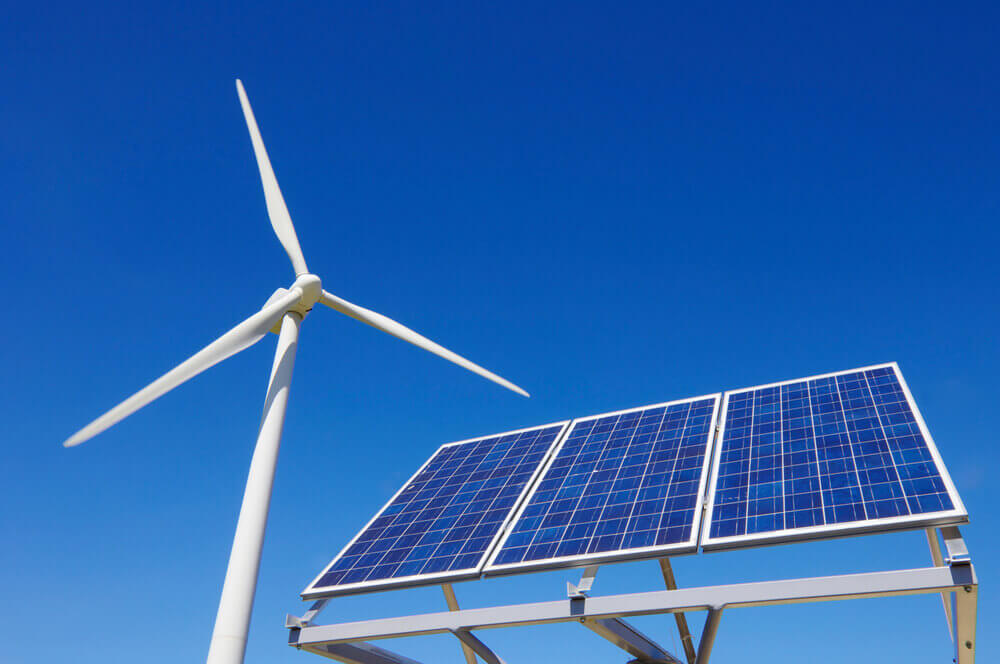
Deciding to generate your own renewable energy is a powerful step toward energy independence and a smaller carbon footprint. 그러나, one of the most common questions we hear is: “Should I install solar panels or a wind turbine?”
The truth is, there is no single “가장 좋은” option. The right choice depends entirely on your specific location, property characteristics, and energy goals.
Here is a comprehensive guide to help you choose the right technology for your site.
The Key Factors in Your Decision
Before we dive into the pros and cons, you need to evaluate three critical factors on your property:
- Your Resource: Do you have more sun or more wind?
- Your Space: Do you have a wide-open field or a sturdy rooftop?
- Your Budget: Are you looking for the lowest upfront cost or the best long-term investment for your specific situation?
Let’s break down how solar and wind power stack up against each other.
Solar Photovoltaic (PV) 힘: The Consistent Champion
Solar power is the most popular choice for residential and commercial renewable energy—and for good reason. It is predictable, quiet, and requires little maintenance.
Solar is the Best Choice If:
· You have a sunny, unobstructed roof or land. South-facing exposure (in the Northern Hemisphere) with no shade from trees or buildings is ideal.
· You live in a suburban or urban area. Solar panels are discreet, silent, and have no moving parts, making them perfect for residential neighborhoods.
· Your peak energy usage is during the day. 태양광 패널은 해가 뜰 때 정확하게 전력을 생산합니다., 주간 에어컨 또는 비즈니스 운영의 높은 비용을 상쇄합니다..
· 유지 관리가 적은 솔루션을 원합니다.. 움직이는 부품 없이, 태양광 패널은 일반적으로 1년에 두 번만 청소하면 되며 종종 25+ 1년 보증.
태양광의 장점:
· 예측 가능성: 태양광 발전은 과거 기상 데이터를 기반으로 고도로 예측 가능합니다..
· 미학: 패널은 터빈보다 더 눈에 띄지 않게 옥상에 통합될 수 있습니다..
· 낮은 유지 관리: 움직이는 부품이 없다는 것은 잘못될 가능성이 적다는 것을 의미합니다..
· 확장성: 더 작은 시스템으로 시작하고 나중에 확장하기가 쉽습니다..
태양광의 단점:
· 야간 가동 중지 시간: 태양광 패널은 배터리 저장 시스템 없이는 밤에 전력을 생산하지 않습니다..
· 구름/그늘에서의 효율성: Production drops significantly on cloudy days or if panels are partially shaded.
Wind Power: The Nighttime Powerhouse
Small wind turbines can be incredibly effective, but they have very specific siting requirements. They generate power day and night, making them a great complement to solar.
Wind is the Best Choice If:
· You live on a large, rural property. You generally need at least one acre of land to safely and effectively install a tower.
· Your average wind speed is 10-12 mph (4.5-5 m/s) or higher. You can check wind maps, but site-specific data is crucial. Wind speeds increase dramatically with tower height.
· You need power at night or during winter. Wind often blows stronger when the sun isn’t shining, making it an excellent pairing for off-grid systems.
· Your local zoning allows it. Many municipalities have strict height restrictions that make wind turbines difficult to permit.
The Pros of Wind:
· 24/7 Production: Wind can generate electricity at any time of day or night.
· Higher Output per Square Foot: In a consistently windy location, a single turbine can produce more electricity than a rooftop array covering the same area.
· Winter Performance: Wind is often stronger in winter, while solar production is lower, providing better year-round balance.
The Cons of Wind:
· Turbulence: To work well, a turbine needs to be placed 30 feet above anything within 500 feet. In turbulent (gusty) wind near trees or buildings, a turbine will wear out quickly and produce little power.
· Maintenance: With moving parts (gearbox, blades), turbines require more regular maintenance than solar panels.
· Noise and Aesthetics: Turbines create a “whooshing” sound and a visual presence that neighbors may not appreciate.
· Wildlife: Birds and bats can be impacted by spinning blades.
Solar vs. 바람: A Head-to-Head Comparison
Feature Solar PV Small Wind Turbine
Best Location Urban, Suburban, Rural Rural, Agricultural, Remote
Space Required Roof or small ground area 1+ acre, tall tower required
Primary Fuel Sunlight (requires clear skies) 바람 (requires 10-12+ mph avg)
Production Time Daytime only Anytime (day, night, winter)
Maintenance Very Low (Clean panels) 보통의 (Moving parts)
Noise Level Silent Noticeable “Whoosh”
Visual Impact Low to Moderate High
Permitting Usually Straightforward Often Complex (Height restrictions)
The Hybrid Solution: Getting the Best of Both Worlds
For those with the space and resources, a hybrid solar-plus-wind system is the holy grail of home renewable energy.
· How it works: Solar handles the daytime loads, while wind picks up the slack at night and during stormy winter months.
· The Benefit: This combination leads to a much more stable energy supply year-round. It also allows you to potentially downsize your battery bank, as you have two sources charging it at different times.
· Who it’s for: This is ideal for remote off-grid homes or properties with excellent sun and wind resources.
Making Your Final Decision: A Simple Checklist
To help you decide, run through this quick checklist:
- Check the Map: Look at a wind resource map for your area. If you are in a low-wind zone (most of the U.S. east coast, 예를 들면), solar is likely your winner.
- Look at Your Roof: Does your roof face south and get full sun? 그렇다면, solar is the easiest path.
- Look at Your Land: 나무가 거의 없는 몇 에이커의 땅을 소유하고 있습니까?? 그렇다면, 바람 평가를 받아 볼 가치가 있을 수도 있습니다.
- 이웃과 대화하세요: 밀집된 동네에 있나요? 풍력 터빈은 구역 지정 위원회와 이웃에 의해 거부될 가능성이 높습니다., 태양광을 유일하게 실행 가능한 선택으로 만들기.
- 전문가에게 문의하세요: 현장 평가는 매우 중요합니다. 전문가는 정확한 태양 잠재력을 측정하고 타워 높이의 풍속을 추정할 수 있습니다..