
An International Power Quality Discussion Forum (IPQDF) Technical Resource
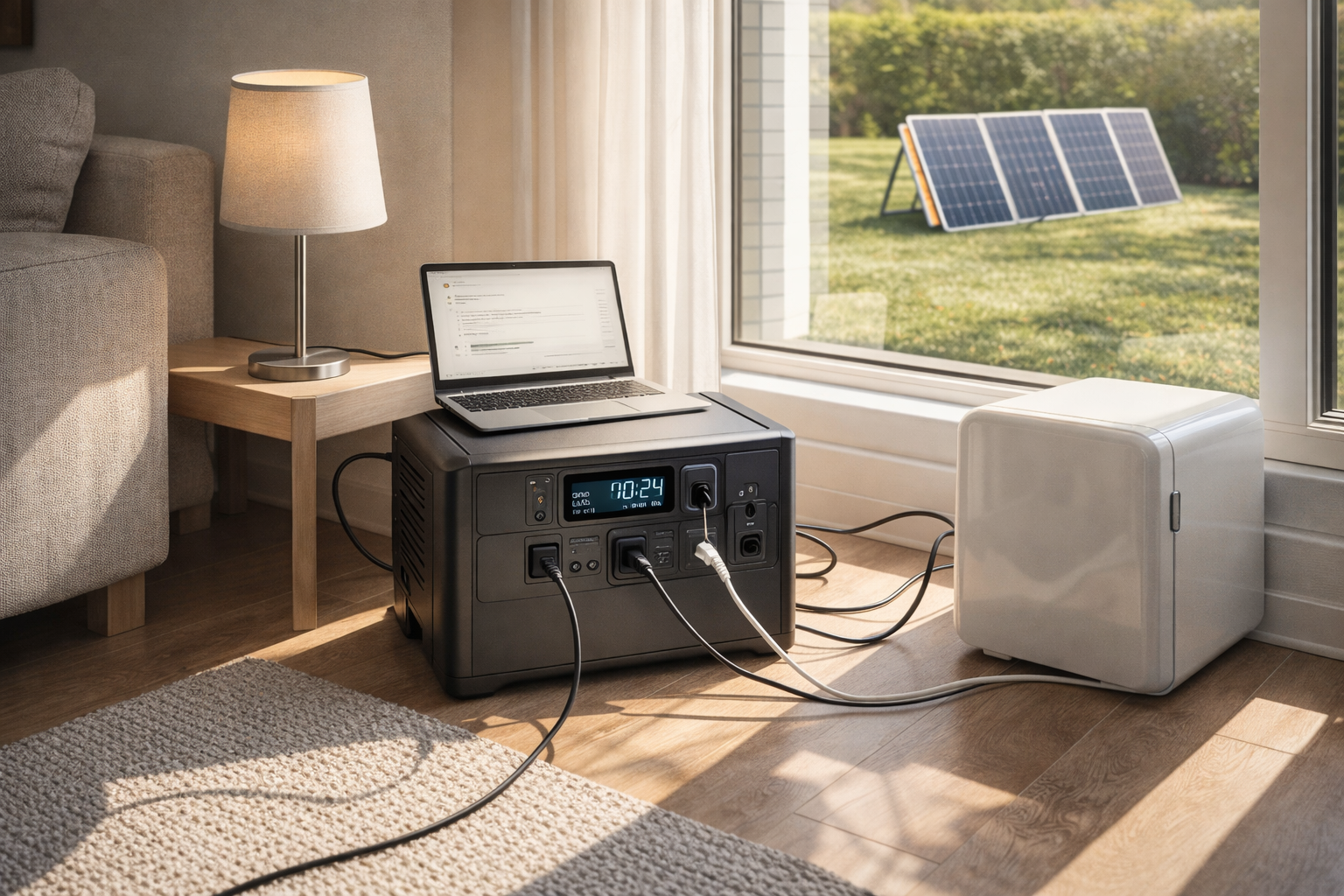
For many homeowners, the idea of mounting panels on the roof, running conduit, pulling permits, and wiring into the main electrical panel can be intimidating. Enterappliance-style solar systems—also known assolar generators, portable power stations, ouall-in-one energy storage systems. These units bundle a battery, inverter, charge controller, and monitoring into a single, movable enclosure that you simply plug appliances into or connect to your home via a transfer switch.
This section explores how these systems compare to the traditional DIY installation, helping you decide which path best suits your needs.
What Is an Appliance-Style Solar System?
Think of it as agiant rechargeable battery with built-in outlets. You charge it from solar panels (placed on the ground or a portable rack), from the grid, or even from a vehicle. Then you plug your devices directly into the unit or connect it to critical home circuits.
Core components inside one box:
- Lithium battery pack (typically LiFePO₄ for longevity)
- Pure sine wave inverter (converts DC to AC power)
- MPPT solar charge controller (optimizes solar input)
- AC charger (for grid or generator charging)
- Monitoring display and app connectivity
- Multiple outlets: 120V/240V AC, USB, 12V DC
Capacity is measured in watt‑hours (Wh). A 5kWh unit (like the Jackery Explorer 5000 Plus) can run a refrigerator for about a day, keep lights and electronics on for days, or power tools on a job site.
Pros of Appliance‑Style Systems
- Simplicity: Unbox, charge, and use. No roof work or electrical permits required for basic operation.
- Portability: Take it with you when you move, or use it for camping, tailgating, or as a mobile power source.
- Noise‑free & emission‑free: Unlike gas generators.
- Expandable within ecosystem: Many brands allow stacking extra battery modules to increase capacity (par exemple, EcoFlow Delta Pro + extra batteries).
- Instant backup: With a transfer switch or interlock, you can power selected home circuits during outages without rewiring the whole house.
- Lower upfront cost: A 5kWh unit with a few solar panels can be had for less than a full roof installation.
Cons to Consider
- Higher cost per kWh of storage: Appliance units often cost more per kWh of battery capacity than DIY battery banks.
- Limited solar input: Maximum solar wattage is fixed; you can’t keep adding panels indefinitely.
- Not eligible for net metering: You can’t sell power back to the utility (dans la plupart des cas).
- Aesthetics: A large metal box in your living space or garage may not appeal to everyone.
- Obsolescence: If a component fails, the entire unit may need factory service; DIY systems allow individual component replacement.
- Scalability ceiling: You can only expand to the maximum supported by the manufacturer (par exemple, 60kWh for Jackery 5000 Plus).
Use Cases Where Appliance‑Style Shines
- Home Backup without Roof Panels: Keep lights, fridge, internet, and a few circuits running during outages. Charge the unit from the grid or portable solar panels placed in the yard.
- Renters & Mobile Homeowners: You can take your system with you when you move.
- Camping / RV / Van Life: Many units are rugged enough for off‑grid adventures.
- Emergency Preparedness: Store it in a closet, charge it from the grid, and deploy when needed.
- Supplementing an Existing System: Add a portable unit to power heavy loads temporarily.
Sizing an Appliance System for 5kW Needs
A 5kW (5,000DE) load refers to theinstantaneous power you can draw. But what really matters for backup isénergie (kWh) —how long you can run those loads.
| Load | Puissance | 5kWh Unit Runtime |
|---|---|---|
| Refrigerator | 150DE | ~30 hours |
| LED lights (10 bulbs) | 100DE | ~45 hours |
| Sump pump | 800DE | ~6 hours |
| CPAP machine | 60DE | ~80 hours |
| Microwave | 1,200DE | ~4 hours |
| Well pump (1/2 HP) | 1,000DE | ~5 hours (intermittent) |
For whole‑home backup, you’ll likely need10–20kWh of storage, which many appliance systems support by adding extra battery packs (par exemple, Bluetti AC500 + B300K combo gives up to 18kWh).
Popular 5kW‑Class Appliance Systems (2025–2026)
| Model | Base Capacity | Expandable To | AC Output | Surge | Solar Input | Notable Features |
|---|---|---|---|---|---|---|
| Jackery Explorer 5000 Plus | 5kWh | 60kWh | 7,200DE | 14,400DE | 4,000DE | 240V split-phase, UPS mode, app control |
| EcoFlow Delta Pro | 3.6kWh | 25kWh | 3,600DE | 7,200DE | 1,600DE | Can double voltage for 240V with two units |
| Bluetti AC500 + B300K | 3kWh (with one B300K) | 18kWh | 5,000DE | 10,000DE | 3,000DE | Modular, hot-swap batteries, 240V split-phase |
| Anker Solix F3800 | 3.8kWh | 26.9kWh | 6,000DE | 9,000DE | 2,400DE | 240V support, expansion batteries |
| Goal Zero Yeti Pro 4000 | 4kWh | 8kWh | 3,500DE | 7,000DE | 1,200DE | Rugged, integrated wheels |
Prices vary widely; expect $3,000–$6,000 for base units, plus $1,500–$3,000 per expansion battery.
Connecting an Appliance System to Your Home
For whole‑home backup, you can integrate the unit with your electrical panel using:
- Transfer Switch: A small sub‑panel that isolates critical circuits. When the grid fails, you flip the switch and power those circuits from the solar generator. Installation should be done by a licensed electrician.
- Generator Interlock Kit: A mechanical device that prevents the main breaker and backup breaker from being on simultaneously. You backfeed the generator into a dedicated breaker. Extreme caution required—must follow local codes to avoid backfeeding the grid and endangering line workers.
- Direct Plug‑In: Simply run extension cords from the unit to your appliances. Simplest but least convenient.
Many manufacturers offer proprietary “smart transfer switches” (par exemple, Jackery’s EHB, EcoFlow’s Smart Home Panel) that automate the switch and even allow app control.
Cost Comparison: Appliance vs. Traditional DIY (5kW Scale)
text
| Item | Traditional DIY (14-panel + 10kWh battery) | Appliance (5kWh unit + 1,600W portable panels) |
|---|---|---|
| Solar Panels | ~€3,500 (14x 400W) | ~€1,500 (4x 400W portable) |
| Inverter/Charger | ~€1,500 | Included in unit |
| Battery | ~€4,000 (10kWh LiFePO₄) | ~€4,000 (unit includes 5kWh) |
| Racking/Mounting | ~€1,000 | €0 (ground deploy) |
| Electrical Components | ~€1,000 (breakers, fil, combiner) | €200 (câbles, adapters) |
| Labor / Permits | ~€3,000 (if hired) | €500 (electrician for transfer switch) |
| Total Estimate | €14,000–€18,000 | €6,000–€8,000 |
Appliance system costs less upfront but provides less storage and solar capacity. Adding more batteries and panels can close the gap.
Safety Considerations
- Indoor Use: Most units are safe indoors (no fumes), but ensure ventilation if operating in a small space—batteries can generate heat.
- Water Resistance: They are not waterproof; keep dry.
- Extension Cords: Use heavy‑duty cords rated for the load.
- Transfer Switch Installation: Always hire a qualified electrician to connect to your home’s wiring.
- Overloading: Respect the unit’s continuous and surge limits.
Which Path Is Right for You?
| Choose Traditional DIY If… | Choose Appliance-Style If… |
|---|---|
| You own your home and want a permanent, high-value investment | You rent or plan to move |
| You have good roof orientation for solar | You have a yard where you can place portable panels |
| You want net metering and lower lifetime energy cost | You prioritize simplicity and portability |
| You’re comfortable with DIY electrical work | You prefer plug-and-play convenience |
| You need to power your whole home indefinitely | You need backup for critical loads during outages |
Conclusion
Appliance‑style solar systems have democratized access to clean, silent backup power. They bridge the gap between a small portable power station and a full‑home solar installation. While they may not replace a roof‑mounted, grid‑tied system for maximum savings, they offer a flexible, affordable entry point into energy independence—or a perfect complement to an existing solar array.
For readers of this guide, the choice boils down to your goals: permanent energy offset and long‑term savings (DIY), or flexible, portable backup with minimal fuss (appliance). Both are valid; both put the power of the sun in your hands.
About IPQDF: The International Power Quality Discussion Forum brings together utility engineers, facility managers, consultants, and researchers to address global power quality challenges. Share your motor-related PQ experiences at www.ipqdf.com.
This article was generated by AI and verified by humain.